
What changed this week
Microsoft moved Service Agent for Microsoft 365 Copilot and Dynamics 365 Customer Service into general availability on June 30. The release adds 70+ MCP tools and 20+ product enhancements, with actions like updating cases, creating notes and activities, drafting customer messages, recommending next steps, and showing interactive app-like cards inside the Copilot conversation.
xAI announced Voice Agent Builder on July 1, a no-code beta for production voice agents on Grok Voice. The pitch is fast setup, telephony, knowledge retrieval, tools, guardrails, MCPs, call recordings, transcripts, human transfer, and observability in one stack. The examples are not abstract: book the appointment, check the order, issue the refund, send the confirmation.
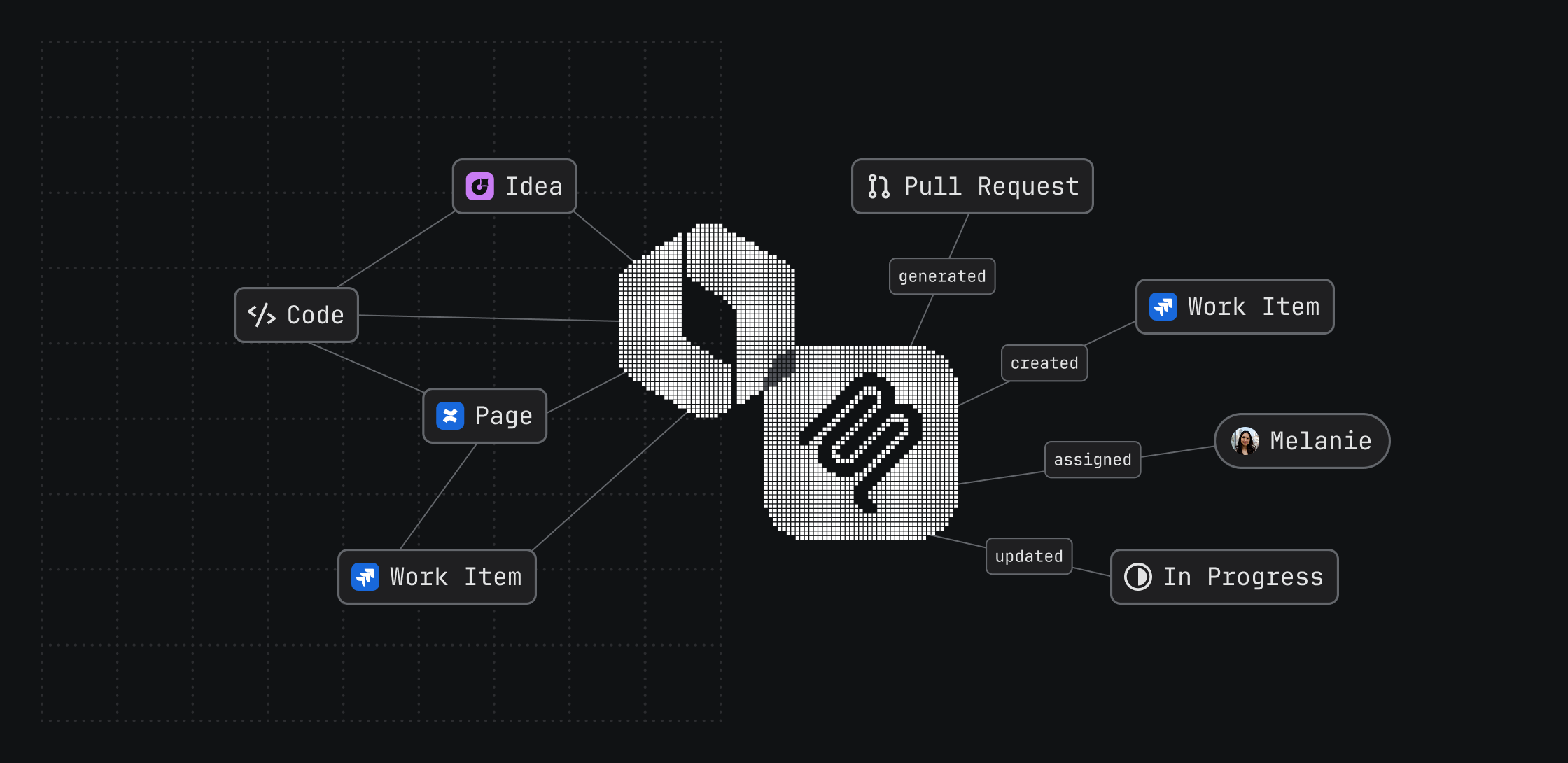
Atlassian’s July 1 Rovo MCP update says its MCP server is handling more than 5 million tool calls per day, and that writes now make up nearly a third of those calls. Coding agents are creating Jira work items, editing comments, reading linked branches and pull requests, and tying delivery work back to discovery context. Notion’s July 1 release points the same way from the workspace side, with External Agents that can be assigned from a shared board instead of hidden in a separate chat.
The real shift is not smarter answers. It is fewer handoffs.
A customer service rep does not need another place to ask, “what happened with this customer?” They need the case, the email, the account notes, the likely fix, and the next action in one place while the customer is still waiting.
A developer does not need a heroic code assistant that writes a patch and then leaves the housekeeping to a human. They need the work item updated, the pull request linked, the follow-up ticket created if something was discovered, and the day closed without copying the same sentence into three tools.
This is why AI agents for customer service, project management, and work automation are suddenly a more useful search category than “best chatbot.” The valuable promise is not a better paragraph. It is the disappearance of the little relay race between systems.
A queue is a useful constraint
The word “agent” still gets stretched until it means everything and nothing. A work queue pulls it back to earth. Here is the case. Here is the caller. Here is the ticket. Here is the task card. Here is what the assistant can read. Here is what it may change. Here is where the human checks the result.
That constraint is not a weakness. It is the part that lets a team trust the thing. Microsoft talks about role-based controls, app modules, queues, and reversible rollout. xAI talks about guardrails, transcripts, tool usage, and live notifications. Atlassian talks about scoped context and persistent work records. Different products, same underlying buyer question: can I let this touch real work without creating a mystery mess?
The bad version will be noisy. Every tool will grow an agent tab. Every assistant will want permission to comment, draft, tag, summarize, schedule, and update. Teams will drown in helpful activity if nobody asks the blunt question: which repeated chore actually went away?
How to judge these tools before the demo sells you
Start with one queue that already hurts. Support tickets waiting on the same clarification. Sales calls that always need the same calendar follow-up. Jira issues that die because nobody links the PR, decision, and next owner. If the tool cannot make that one queue calmer, do not expand it.
Then ask for the after-state. What did the assistant change? What did it refuse to change? What still needs a person? Where is the note a teammate can understand tomorrow? If the answer only exists in a transcript or a bot thread, the work did not really move. It just changed costumes.
Finally, count deletions, not features. Fewer status pings. Fewer “can you summarize this?” messages. Fewer tabs open during a customer call. Fewer late-day cleanup passes. If the dashboard looks busier but the day feels the same, the agent has joined the problem.
Two useful disagreements
Ivy Chen would slow the rollout down to one named owner. A customer service agent that can update records sounds great until support, QA, and the manager disagree about who reviews the change. Her test: one queue, one owner, one visible review rule, then expand only if the cleanup work actually drops.
Cass Bell would distrust the activity graph. Five million tool calls sounds impressive, but tool calls are not time back. Her question is nastier and better: did the assistant kill a meeting, a ping, a copy-paste ritual, or a second inbox? If not, the product may be selling a prettier queue.
My read: the winners will not be the assistants with the biggest promise. They will be the ones with the clearest place to stand. The front desk. The ticket. The case. The task card. A bounded job people recognize beats a miracle box they have to manage.