live • 2026-06-23 • By Priya Rao • 5 min read • 5 sources
Zoom and Verint are making it easier to build, test, and manage AI customer-service agents. That only helps customers if the agent can finish the real support job: resolve the issue, record the right action, or hand off without making the person start over.
AI customer serviceAI agentscustomer support automationchatbotsZoom Virtual AgentVerint Agent Factorysupport metricswork automation
live • 2026-06-23 • By Jun Vega • 4 min read • 5 sources
Adobe is putting AI assistants inside Photoshop, Premiere, Illustrator, InDesign, and Frame.io, while Firefly's new studio keeps projects and reusable visual elements together. The useful part is not a bigger prompt box. It is making production chores visible enough to review before anyone saves or exports.
Adobe AI assistantsCreative CloudFireflycreative workflowsAI editing toolsdesign productivityprompt-based editing
live • 2026-06-22 • By Theo Marlow • 5 min read • 5 sources
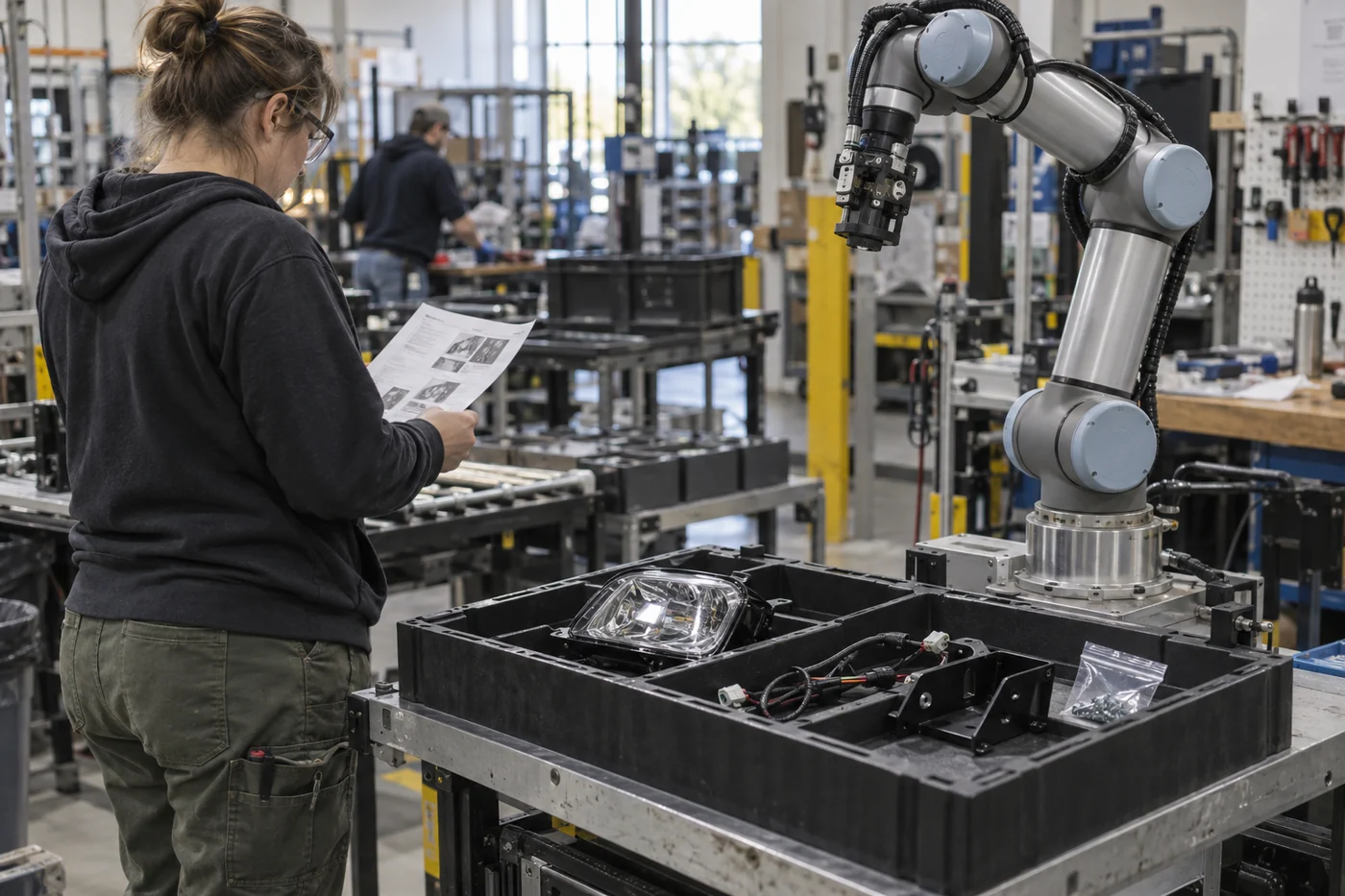
XDOF came out of stealth with $70 million and a large open robot teleoperation dataset, NVIDIA released physical AI skills for coding agents, and Cobot launched Proxie Gen 2 with self-directed cart work. The shared signal is not a smarter-looking demo. It is robotics moving toward data, evaluation, and production routines that can be checked.
roboticsphysical AIrobot training dataAI agentswarehouse automationrobot deploymentteleoperation
live • 2026-06-22 • By Sable Quinn • 5 min read • 4 sources
Samsung is rolling ChatGPT Enterprise and Codex out to employees in Korea and to its DX division worldwide. The useful signal is bigger than one enterprise deal: coding agents are being packaged as workplace tools for people who want internal apps, dashboards, and workflows without becoming developers.
AI agentsCodexenterprise AIinternal toolsagent adoptionGoogle Managed Agentsworkplace automation
live • 2026-06-21 • By Ren Ortiz • 5 min read • 4 sources
GitHub is pushing Copilot toward task-aware model routing and cheaper long-session context handling, while Anthropic's Claude Code data says expert direction still changes success rates. The next useful agent UI should show how work gets dispatched.
AI agentscoding agentsagent operationsGitHub CopilotClaude Codemodel routingrobotics agents
live • 2026-06-21 • By Ivy Chen • 4 min read • 5 sources
GitHub, OpenAI, and Anthropic are pushing coding agents toward scheduled work, automatic model routing, and shareable session output. The next adoption problem is making every unattended run easy to inspect.
AI agentscoding agentsagent operationsGitHub CopilotOpenAI CodexClaude Code
live • 2026-06-20 • By Noah Park • 5 min read • 5 sources
Google is moving consumer Gemini CLI users toward Antigravity, while Codex and Claude Code keep spreading agent work across clouds, browsers, hosts, and shareable canvases. Treat the workflow as the asset, not the terminal command.
coding agentsagent workflowsCodexGemini CLIClaude Codeoperator tooling
live • 2026-06-20 • By Mara Vale • 5 min read • 5 sources
Microsoft's Shadow-Frog turns idle coding-agent time into active codebase exploration. The useful part is not memory by itself, but memory with tests, citations, and expiry.
coding agentsagent memorydeveloper toolsevalsoperator tooling
2026-06-19 • By Mara Vale • 5 min read • 3 sources
Google DeepMind, MIT Technology Review, and Gartner are all pointing at the same practical question: what should an AI helper be allowed to do, and when should it stop for a human yes?
AI agentsagent securitymulti-agent systemsgovernance
2026-06-19 • By Ren Ortiz • 4 min read • 3 sources
NVIDIA GEAR's ENPIRE research shows coding agents moving from code generation into robot-training loops, where memory, resets, verification, parallel evaluation, and failure repair matter as much as the base model.
AI agentsroboticscoding agentsagent harnesses