
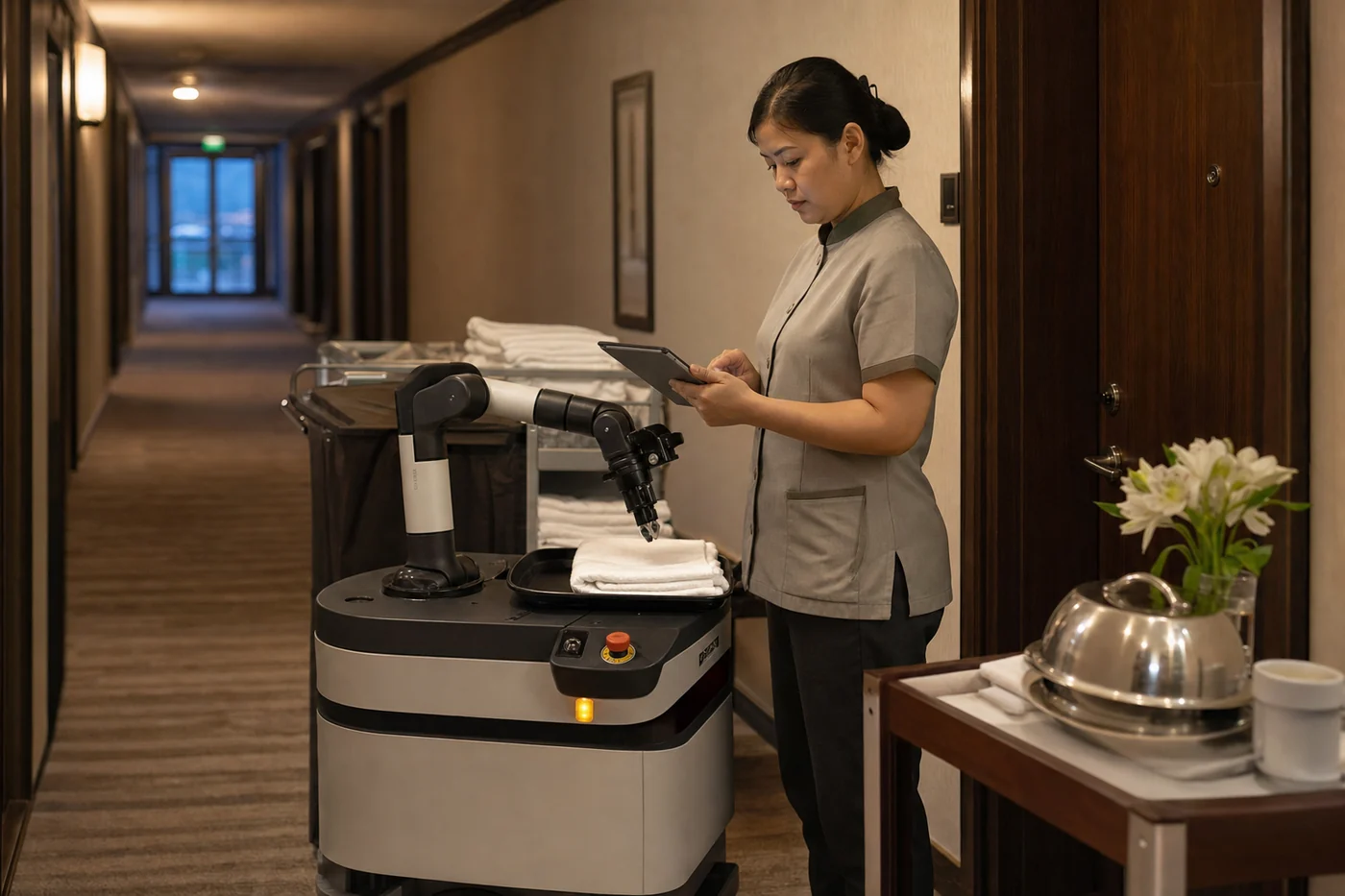
The hallway was the easy part
A delivery robot that stops outside a hotel room can still leave the last bit of work to a person. A worker opens the door, picks the right item, checks the room number, handles the exception, apologizes if something looks wrong, and keeps the hallway from turning into a traffic cone museum.
A service robot with an arm changes the deal. Now it may select a towel, place a cup, unload a parcel, move around a patient cart, or reach near someone else's property. The task becomes less like navigation and more like a tiny promise about the world.
This is the object.
This is the destination.
This is the next motion.
This is why I stopped.
If those four facts are hidden inside a model or a dashboard nobody in the hallway can see, the robot is not ready for normal service work.
Physical AI fails in awkward places
The last meter is full of dumb, real problems. A child leaves a scooter by the door. A guest sets a coffee on the delivery tray. A hospital cart blocks half the corridor. A hotel worker is carrying sheets with both hands and cannot open an admin console. A package label is smudged. A door is propped open for the wrong room.
The trust surface should be in the room
If a robot is about to touch the world, people nearby should see the selected object, destination, next motion, stop reason, and correction path. A dashboard in another office is not enough for a hallway handoff.
The practical buyer question
Before trusting a service robot, ask what happens after a wrong guess: does it pause, show what it believed, let a worker correct it in normal language, and leave the space no worse than it found it?