
Search no longer has to end with instructions
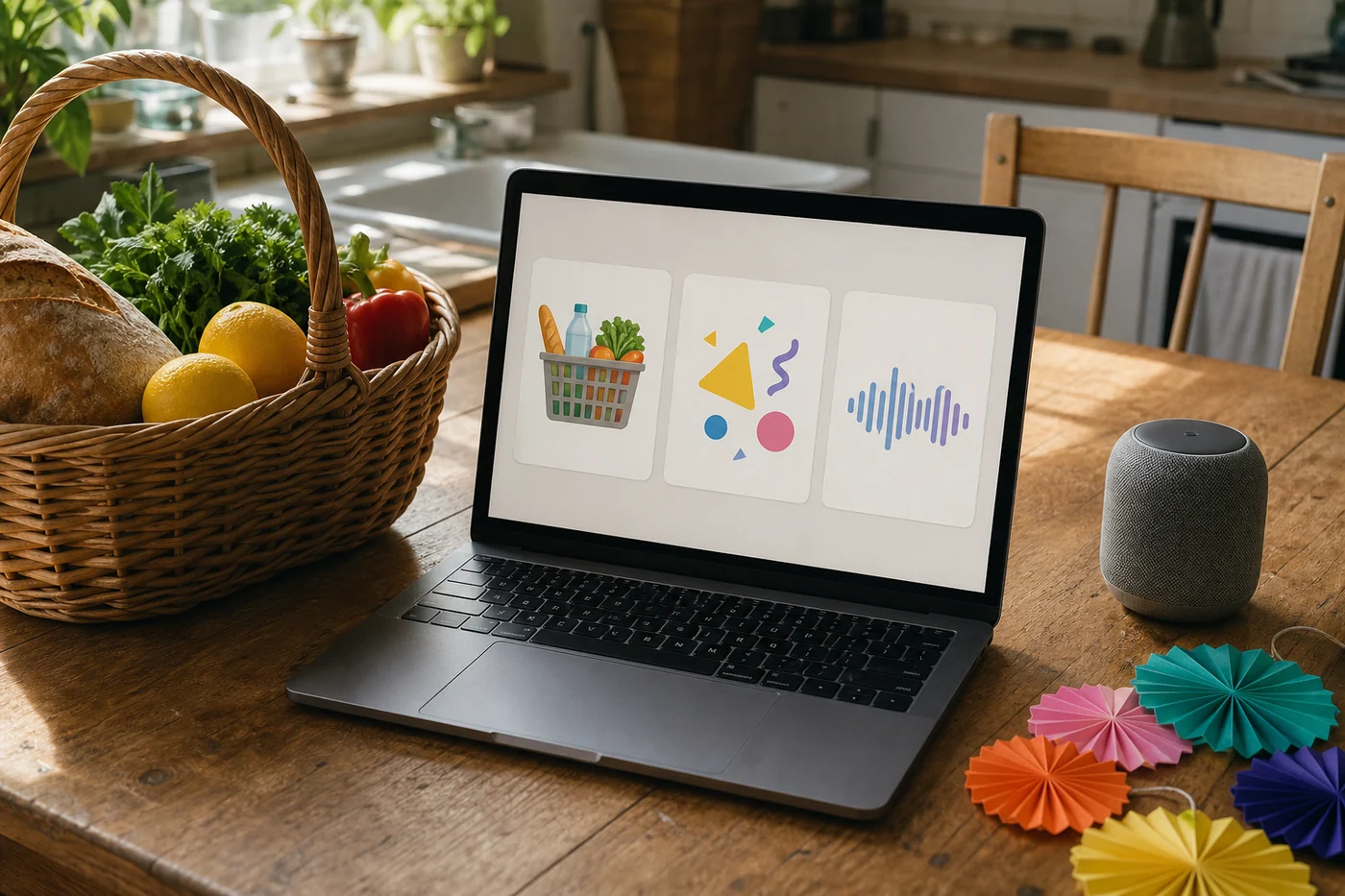
Google started rolling out the three connections to U.S. users on July 16. Its own examples stay close to familiar errands: plan a barbecue and add the ingredients to Instacart; ask Canva for flyer ideas; make a party playlist and save it to YouTube Music.
The handoff matters. Google says Instacart checkout still happens with a few taps in the app or on its website. Canva returns template options rather than quietly publishing a design. YouTube Music can save the playlist and open it for playback. AI Mode does some of the assembly, then the service where the thing lives takes over.
TechCrunch described the update as a move from answering questions toward completing tasks. That is accurate, but 'completing' needs a small asterisk. The assistant prepares a usable next state. You still see the cart, edit the flyer or listen to the songs. It is closer to laying everything on the kitchen table than running the whole party.
The boring middle is where the time goes
Most errands are not hard because any single step is difficult. They are tiring because the same context gets rebuilt in five places. The guest count lives in a message. The menu is in Search. The list gets copied into a grocery app. The time and address get typed into a design. Then someone opens a music app and starts over with the mood.
Connected apps can remove that middle. A useful assistant does not need permission to run your weekend. It needs to carry 'twelve people, vegetarian option, starts at four' far enough that you are checking prepared choices instead of retyping the setup.
That is a smaller promise than the usual AI-agent pitch. It is also easier to judge. Did the cart contain the right quantities? Did the design include the right date? Did the playlist fit the room? If yes, you saved a handful of dull transitions. If no, you found the boundary before a purchase or public mistake.
A prepared cart is not a correct cart
The grocery example makes the limit obvious. An ingredient list is not yet an order. Package sizes vary. People have allergies. The store may substitute a product. A recipe that says 'two onions' can become a bag of six because that is how the item is sold.
Before checkout, scan quantities, substitutions, dietary constraints and the store selection. For a Canva draft, check the date, address, names and whether the template is licensed for the intended use. For a playlist, look for explicit tracks and the one song the guest of honor cannot stand. None of this requires fear. It requires the same quick review you would give work prepared by a helpful person who was not in the original conversation.
Google also says connected apps can work alongside Personal Intelligence for more tailored responses. TechCrunch notes that AI Mode's personalization can draw on connected Google services such as Gmail and Google Photos. That may reduce repeated context, but it also makes a simple habit useful: when the answer feels oddly specific, check which connection supplied it before acting.
Two readers will draw the line in different places
Ivy Chen would start with the person who has to rescue the task. If one family member connects everything and another has to finish the order, the handoff should show the request, the prepared items and what still needs a decision. A shortcut that only its setup person understands has not removed much household work.
Cass Bell is more interested in the business underneath the convenience. Search is choosing which partner receives the next action. Today the list is tiny and obvious. As it grows, users will need to know whether an app appeared because it was the best fit, because it was connected, because Google owns it or because a commercial relationship put it there.
Both objections point toward the same practical rule: keep the result inspectable. You should be able to see what was prepared, where it will go and which step is still yours. The assistant can save the copying without hiding the path.
Try one low-drama errand this week
Do not begin by asking AI Search to plan an entire trip, manage a family calendar or redesign a business. Pick one request where the output is cheap to inspect and easy to abandon.
A grocery list for one familiar meal is a good test. So is a playlist for a two-hour drive or three flyer templates for a neighborhood event. Give the real constraints once. Let AI Mode prepare the result. Then count how much you had to fix and whether you avoided re-entering the same facts in another app.
If the review takes longer than the old route, disconnect it and move on. If it removes ten minutes of copying and leaves the final decision obvious, that is already useful. An AI assistant does not have to take over the errand to give part of your afternoon back.