
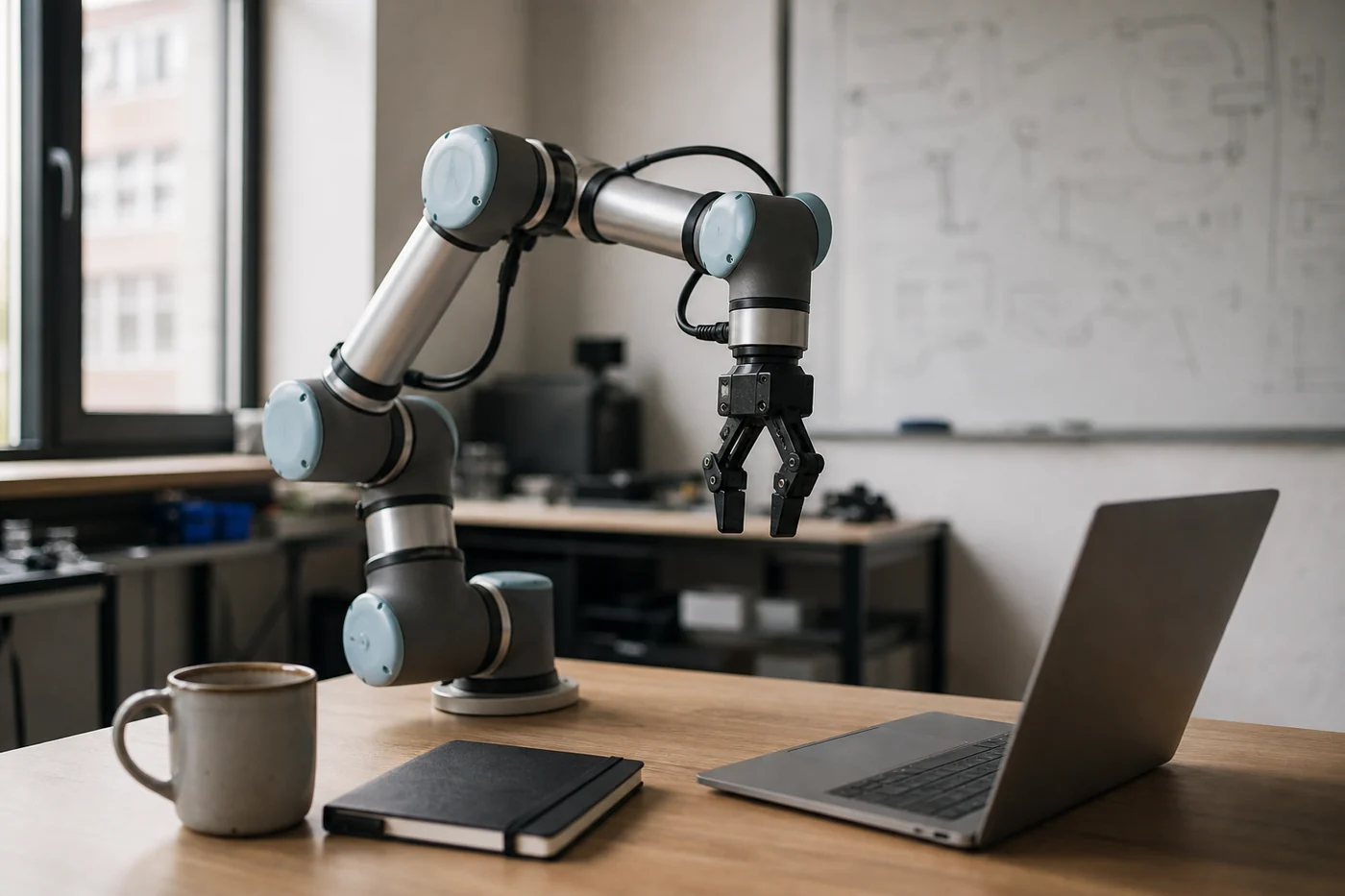
The demo can teach the wrong lesson
Robot demonstrations are useful because they show motion. They are also dangerous because they include noise. A person may guide a robot arm around a laptop because the laptop matters. Or the laptop may simply happen to be there. A child in the room, a chair pulled out too far, a mug turned a certain way, a hand resting on the table — any of those details can become false signal if the system cannot tell preference from scenery.
That is why the MIT work is more interesting than another robot doing one chore in a clean demo. The research starts from a boring truth: demonstrations show how to act, but not always why the action happened. Language helps, but normal language is vague. “Stay away” is not enough. Stay away from the person, the laptop, the table edge, or the camera? The robot has to resolve that before motion becomes safe.
The paper's framing is useful for AI robotics and for less physical AI assistants too. Most real work contains unstated preferences. If a system learns the wrong hidden preference, it can look obedient while slowly becoming annoying or unsafe.
MIT's approach turns instructions into a filter
Masked IRL combines a user's demonstration with the user's language. First, a language model compares the demonstrated path with a reference path and rewrites the vague instruction into something more specific. MIT gives examples like turning “stay close” into “stay close to the surface of the table.”
Then a second language model marks which state details matter. Relevant details get used in the motion plan. Irrelevant details are treated as noise. The technical version is called a state-relevance mask, but the plain-English version is better: the robot is being taught what not to notice.
That matters because a robot with limited data can overfit to accidents. The research reports gains in both simulation and real-world robot-arm tests, with up to 15% better performance than comparable baselines and up to 4.7x fewer demonstrations. Those are research numbers, not a home-robot warranty. Still, they point to the right product question: how many times does a person have to show the robot before it stops learning the wrong thing?
The useful scorecard is small and unforgiving
If I were testing this before trusting a robot in an office, kitchen, warehouse, or lab, I would not start with the prettiest success clip. I would start with the ambiguous cases. Give the robot ten demonstrations with clutter that should not matter, then move the clutter and ask it to repeat the task.
The scorecard should include: demonstrations needed, task success after room changes, wrong-avoidance rate, collision or near-miss count, time spent asking clarifying questions, stale-detail reuse, reset minutes, and whether a human can see what the robot thinks is relevant before it moves.
The last one is not cosmetic. If the robot learned “avoid laptop,” show that before motion. If it learned “stay near the table edge,” show that too. A person should not have to infer the robot's preference model from a near miss.
This changes the job for the person teaching the robot
The optimistic version is simple: people should not need to write tiny legal contracts for every chore. If a robot can watch one or two demonstrations, hear a normal instruction, and infer the important constraint, the teaching burden drops. That is the promise in MIT's result: less demonstration data, better handling of ambiguity, and a system that uses language for more than a decorative command box.
The cautious version is just as important. A robot that guesses hidden intent needs a way to expose the guess. Otherwise the human gets a new chore: supervising a machine that may have learned an invisible rule from background clutter.
For normal users, this is where AI assistants and robots meet. The value is not full independence. The value is less repeated explanation, fewer fussy setup rituals, and a cleaner moment where the system says: here is what I think matters; approve, correct, or stop me.
Two useful disagreements
Jun Vega wants the interface test first. His version is blunt: if the robot thinks the laptop matters, highlight the laptop before motion. If it is ignoring the notebook, make that visible too. A tiny preview of “what I am protecting” would calm people down more than a technical confidence score.
Cass Bell worries about the data bargain. The same examples that teach a robot to handle a weird room can become a map of someone's home or warehouse floor. If those edge cases improve a vendor model, the buyer should know what leaves the site, what stays local, and what can be deleted.
I think both are right, and they point to the same standard. The robot should learn faster, but not silently. Measure fewer demos, fewer wrong lessons, fewer interruptions, and fewer surprises about where the teaching data went. If those numbers do not improve together, the demo is not ready for real rooms.