
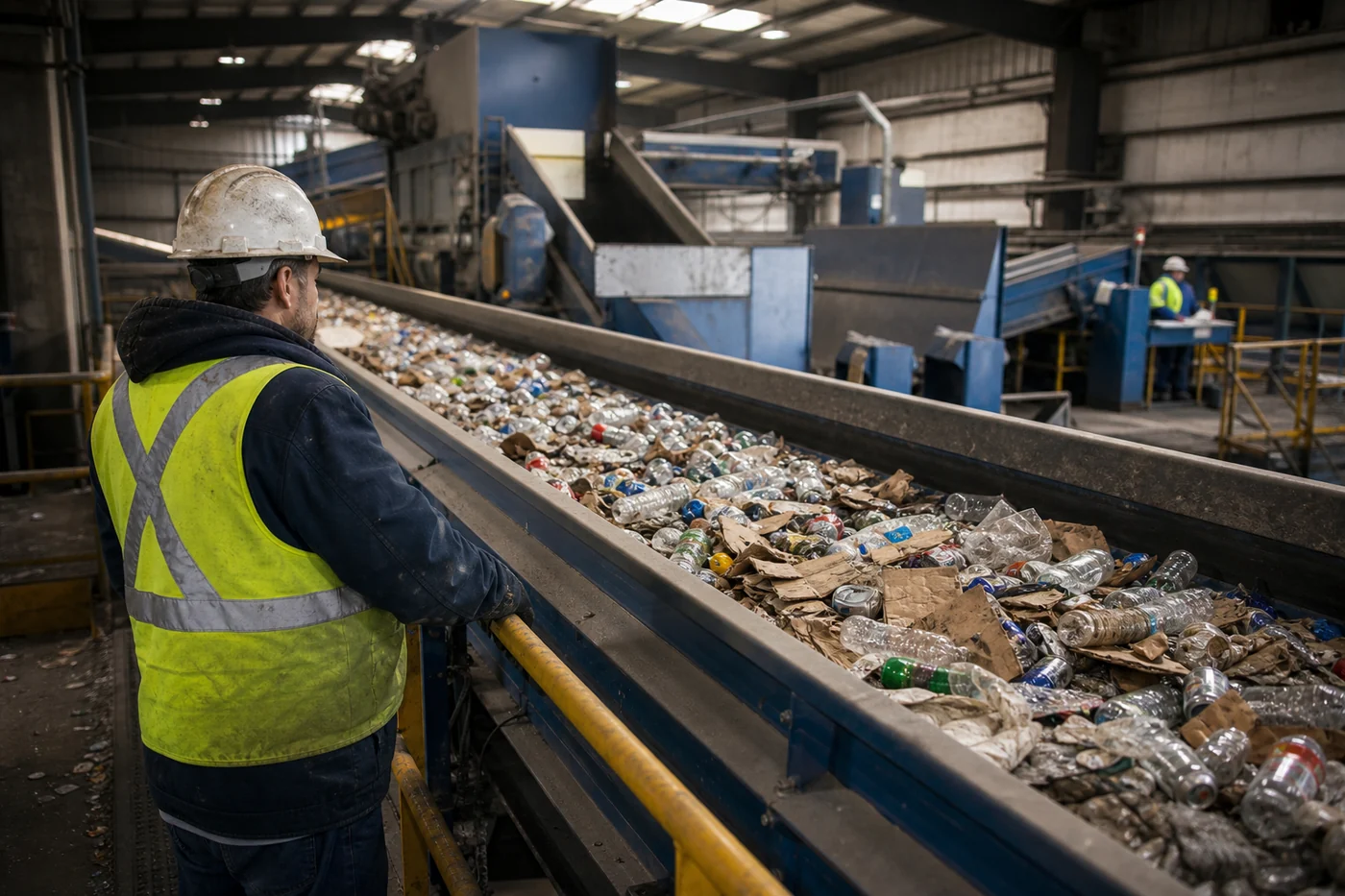
The useful screen is close to the belt
Waste Dive reports that Navigator is meant to let facility staff ask questions about throughput, equipment trouble and commodity quality, rather than work through dashboard after dashboard. One example: using the system to look upstream and downstream when a line has a contamination problem.
That is the part worth paying attention to. A contamination alert is not useful because it has a clever explanation. It is useful when a supervisor can connect it to a visible condition: this line, this material, this shift, this sensor read, this equipment setting. Otherwise the crew gets a recommendation with none of the context needed to challenge it.
A good first screen would be blunt: which belt is affected, what the system thinks changed, the last normal comparison, how fresh the read is and whether it is suggesting a change or has already made one. The physical stream should not become an afterthought behind a chat transcript.
A recommendation and a machine change are different events
EverestLabs says Navigator can tie its reasoning into equipment controls and workflows, including changing recipes and settings on different equipment. Its syndicated launch announcement makes larger claims too, including potential throughput gains and reduced downtime. Those are vendor claims, not independently established results from the pilots.
That distinction matters because a useful suggestion can be reviewed at a workstation. A changed setting can alter what a machine does next. The interface should never blur the two. Staff need to know whether they are reading a proposed adjustment, approving one, or arriving after an automatic change has already happened.
And after the adjustment, show the result in the same language: material stream improved, no change yet, sensor confidence fell, belt paused, or human check needed. A plant does not get safer just because a model has a more detailed sentence for its guess.
The boring record is how a crew gets its time back
The time-saving version of this product is not a robot process engineer with a dramatic personality. It is a system that saves someone from hunting through cameras, logs and three different control screens just to answer a basic question about why a line is underperforming.
That requires a record a new shift can inherit. Keep the material and location, the before-and-after condition, the setting that changed, the person who approved it when approval was required, and the unresolved question. If the same contamination pattern returns tomorrow, the crew should not have to reconstruct today from memory.
Recycling is full of material that refuses to arrive in a clean, repeatable form. The software should be honest about that mess. “Unknown because the camera was obscured” is more useful than a neat recommendation built from a bad view.
What a recycling facility should ask before it expands an AI pilot
Ask which decisions the system may recommend and which it may change. Ask where a person can see the evidence behind a recommendation without leaving the floor. Ask what happens when sensors disagree, a camera goes stale or the material stream becomes unfamiliar.
Then run an ordinary bad-day test: mixed material, a fouled lens, a short stop, a rushed handoff between shifts. Can a supervisor find the last known condition and safely return the line to it? Can the crew see why the system held, slowed or changed something? If not, the facility has added another thing to interpret during the part of the day when nobody has spare attention.
AI in recycling plants may eventually remove a lot of hunting and guesswork. It should not move that work into a black box and call the shift more efficient.
Ivy wants the handoff to reduce work. Sable wants the claim to survive the bad day.
Ivy Chen sees the buying question in the handoff. If a maintenance lead still has to reopen the footage, rewrite the incident and explain the recommendation to the next shift, the new system has not removed admin. It has added a smarter-looking place for the same mess to land.
Sable Quinn is less interested in the phrase “AI-run plant” than in the first ugly morning after it appears on a launch page. A throughput claim becomes real only when the facility can show what slowed, what changed and whether the crew could recover without turning into the system’s unpaid support team.
They are pulling at the same thread. The product should make the line easier to understand for the person who has to keep it moving.