
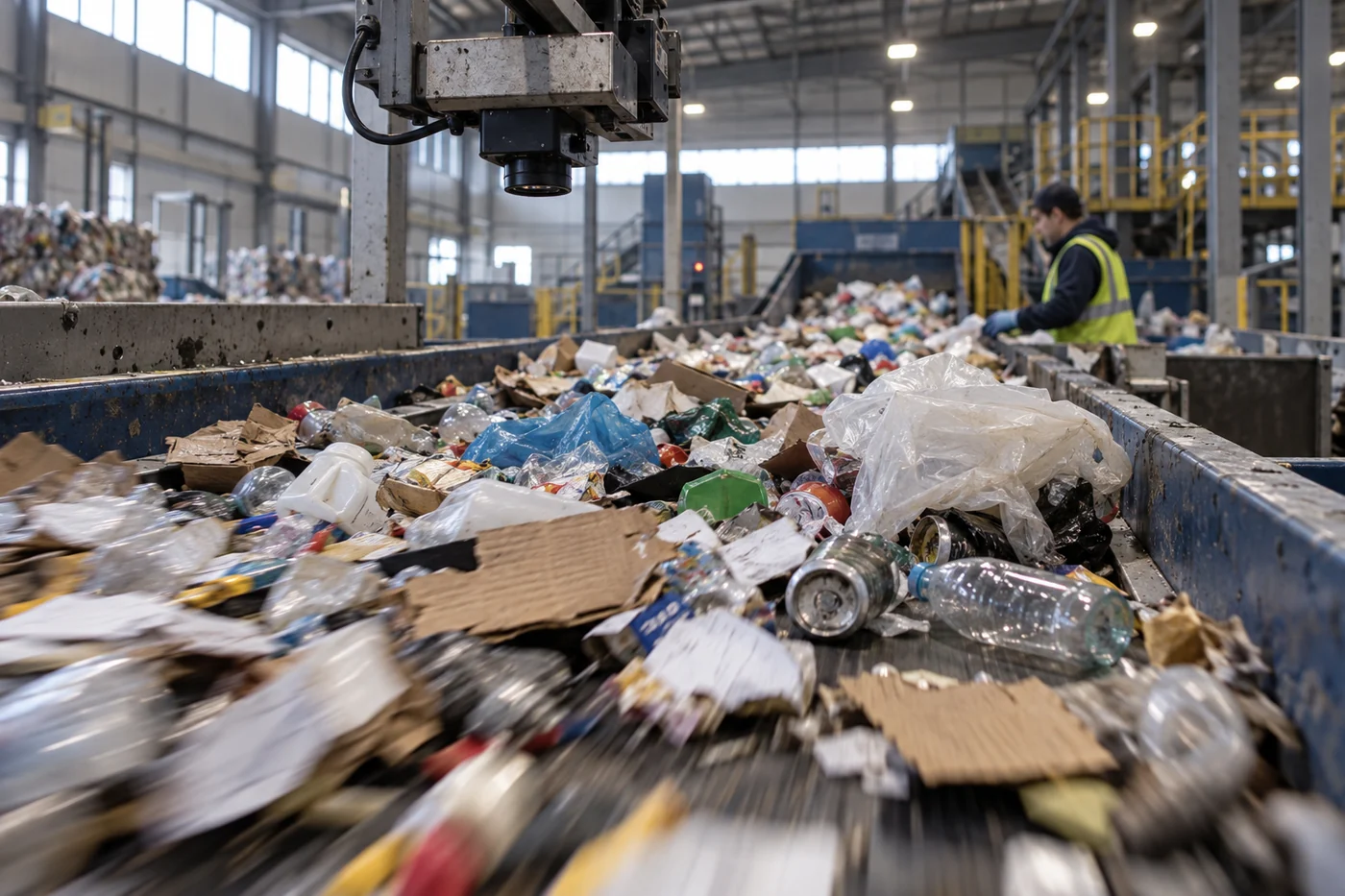
The conveyor is the test, not the demo table
At a materials-recovery facility, objects arrive crowded together, moving fast, wet or dirty, partly hidden, and not necessarily accepted by that local program. The NIST review notes that plastic film and bags can tangle equipment, while contamination can lower output quality or leave a bale unacceptable to a downstream buyer. Batteries and medical waste add a separate safety problem.
This is why a clean recognition clip tells you very little. Recognizing a flattened bottle is not the same as separating it at speed, avoiding the bag wrapped around it, and leaving the next stage with material it can actually use. A wrong label in a chat is annoying. A wrong sort can become downtime, rework or a batch somebody else has to reject.
Seeing may be the right job for AI right now
The review does not say robots have no place on a sorting line. It says the experts consulted saw movement toward standalone AI detection, especially for quality control and facility monitoring, rather than coupling every detection system to a robot arm. Existing equipment and people can then act on a more useful signal.
That division of labor is less cinematic and easier to trust. Let the system flag a rising contamination pattern, show the stream that needs attention, or catch a material class that is drifting. Do not make it pretend that a camera has solved the grip, the throughput, the maintenance and the downstream market at once.
A useful alert leaves a person with a clear next move
Mara's test is plain: if the system calls something wrong, the crew should be able to tell which material, which line or batch, and what the system is uncertain about before the next shift inherits the mystery. A green quality score after a setting change is not much help if the mixed output has already left the building.
The alert should earn its interruption. Name the material pattern, where it was seen, how recently it was seen, and whether the signal is strong enough to stop a line, inspect a sample, or simply watch the next run. Anything vaguer becomes another dashboard that workers learn to ignore.
What good measurement looks like
Priya Rao would not stop at a detection rate. Count false alarms, material caught before it contaminates a bale, line interruptions, manual checks created, jams avoided, and how long it takes a crew to tell whether the alert was worth acting on. A system that sees more but creates a new queue of doubtful alerts has moved the sorting problem onto a different screen.
Ren Ortiz puts the physical version even more simply: show what the sensor saw, what machinery or person is expected to do next, and what happens if nobody agrees with it. The handoff matters because the object is still on a conveyor. It does not wait for a tidy explanation.
The lesson reaches beyond recycling
A lot of AI assistants are being asked to turn observation into action: read an invoice, watch a shelf, notice a missed task, summarize a meeting. The tempting mistake is treating recognition as completion. It is not. The hard part is the handoff from a plausible signal to a person who can safely make the next choice.
For teams evaluating AI tools for physical or messy work, ask for that handoff in the trial. What does the system show when it is unsure? Who gets the alert? What does a correction change tomorrow? And after the tool is installed, are people spending less time chasing the same problem? If the answer is no, the camera may be clever. The work is still there.