
A good result is not yet a usable result
Anthropic reports that Mythos 5.1 designed binders that performed strongly in external testing, and that it accelerated seven open-source protein and genomics models by up to 2.5 times with identical outputs. Those are meaningful technical claims, not proof that an ordinary research group can hand a model a question and skip the difficult parts of science.
The first practical test is narrower: could a colleague reconstruct why a candidate was selected, rerun the analysis, and see what comparison or control could change the conclusion? If the answer lives only in a long chat or a pile of temporary files, the apparent speed can become somebody else’s cleanup job.
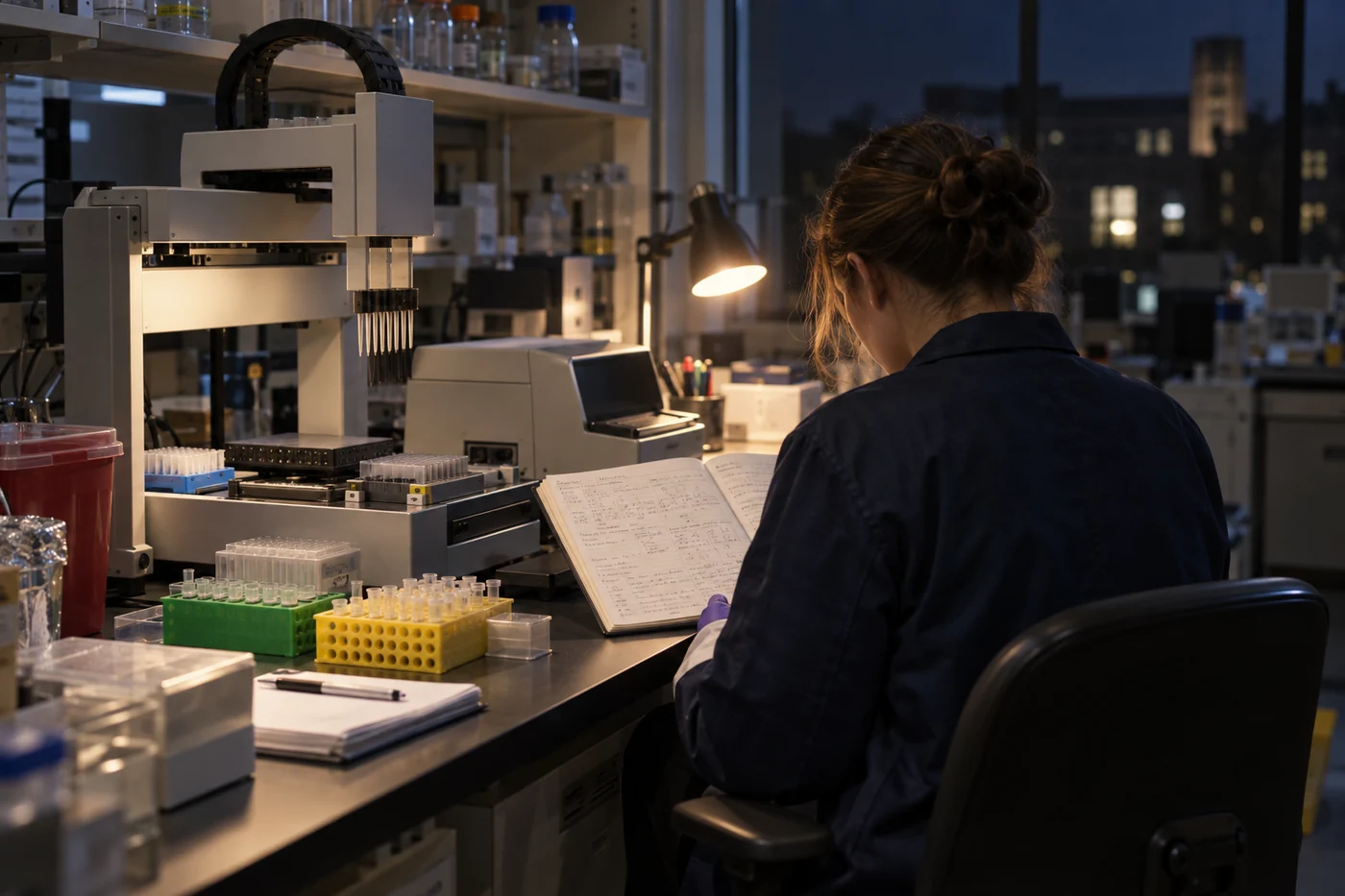
What to ask before calling it a discovery
For any AI-assisted result that might guide the next experiment, ask four plain questions:
1. What did the system actually change or choose? 2. Which inputs, tools and versions shaped that choice? 3. What did it try that did not work? 4. What independent check would make us stop, revise or proceed?
This is not paperwork added after the interesting work. It is what lets a small lab keep moving when the person who started the run is out, the sample behaves strangely, or a result looks too good to accept at face value.
The boring record is the product
AI can make research feel unusually fast because it can move from a question to a plausible plan in seconds. Physical experiments and serious analyses do not become less fussy because the first draft arrived quickly. A lab still needs to know whether an instrument was calibrated, a sample foamed, a comparison was fair, or a clean-looking chart hid an excluded result.
The better story is not that a model worked all night. It is that the next scientist can arrive in the morning and tell what happened without guessing.