
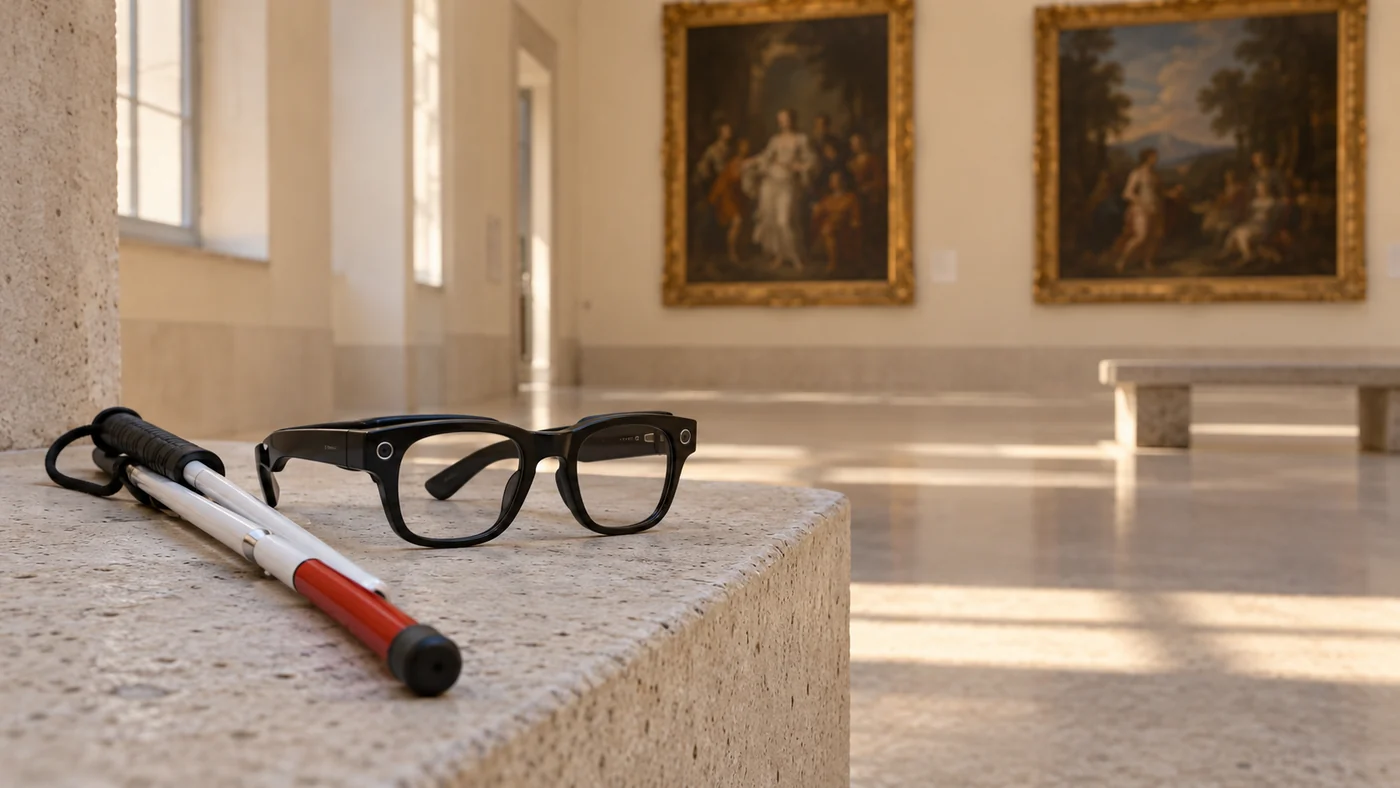
Eight paintings, with a description already waiting
Brera announced Sensing Art on October 13. Meta's announcement followed on October 14. The project brings together the museum, Meta and EssilorLuxottica, working with Italian organizations including the Associazione Nazionale Subvedenti, the Unione Italiana dei Ciechi e degli Ipovedenti and the Fondazione Istituto dei Ciechi di Milano.
According to the museum, the route covers eight works. Each has three dedicated audio tracks: a description of the visible composition, art-historical context and an artist biography. Short orientation tracks connect the stops. The Grande Brera app supplies the tour, while the glasses' camera and speakers let a visitor identify a painting and hear the associated audio without handling the phone for that step.
Those descriptions contain work worth preserving. On Brera's existing DescriVedendo page, the account of Mantegna's Dead Christ explains the viewpoint and divides the canvas into a numbered grid to place its details. A listener gets an organized route through the picture, not merely a list of objects.
A recorded description and an AI answer are different things
The core tour described in the announcements retrieves an existing description. It should not be reported as an AI model inventing a fresh account of every painting it encounters.
Meta also describes optional access to its AI assistant for questions about context and surroundings, and to Be My Eyes for live assistance from sighted volunteers and qualified operators. These sit alongside the tour. A prepared museum track, a generated answer and a live person's help have different sources and different limits.
I would want the audio to make those transitions easy to recognize. Someone asking a follow-up should know whether the answer comes from the museum's material, an AI response or another person. The announcements establish that these options exist; they do not show us exactly how every transition sounds.
What the pilot has not established yet
Meta says blind and visually impaired people participated in testing and consultation that shaped the experience. Neither announcement provides participant counts, recognition-error results or a measured comparison of visits with and without the glasses. This is evidence of a pilot and its intended use, not proof that it works equally well for every visitor.
The open-ear speakers are intended to let people hear the tour without shutting out the room. Whether the balance is comfortable in a busy gallery is something visitors can judge. So is the ease of pausing, replaying a passage or recovering when a painting is not recognized.
A useful next report would include visitors' own accounts of those moments, including people who prefer the existing app or another form of assistance. Choosing not to wear the glasses should remain an ordinary way to visit, not a failed attempt at using the new service.
If you are planning a visit
As checked on October 15, Brera lists the glasses as available on free loan to blind and visually impaired visitors at its info point, Tuesday through Friday, from 10:00 to 16:30, by prior appointment. Free equipment loan is not a statement about museum admission; confirm the visit arrangements directly.
Use the museum's Sensing Art page for booking and describe any logistical support you need. Before travelling, ask about the tour language, setup assistance and the alternative if you decide the glasses are not comfortable. The published announcements do not settle all of those practical details.
There is something encouraging about a new AI service that gives older accessibility work another way to be heard. If the glasses let a visitor spend less of the afternoon operating a device and more of it with a painting, that is a worthwhile change. The people taking the tour get to decide whether it happened.