
What Swiggy Guru can do
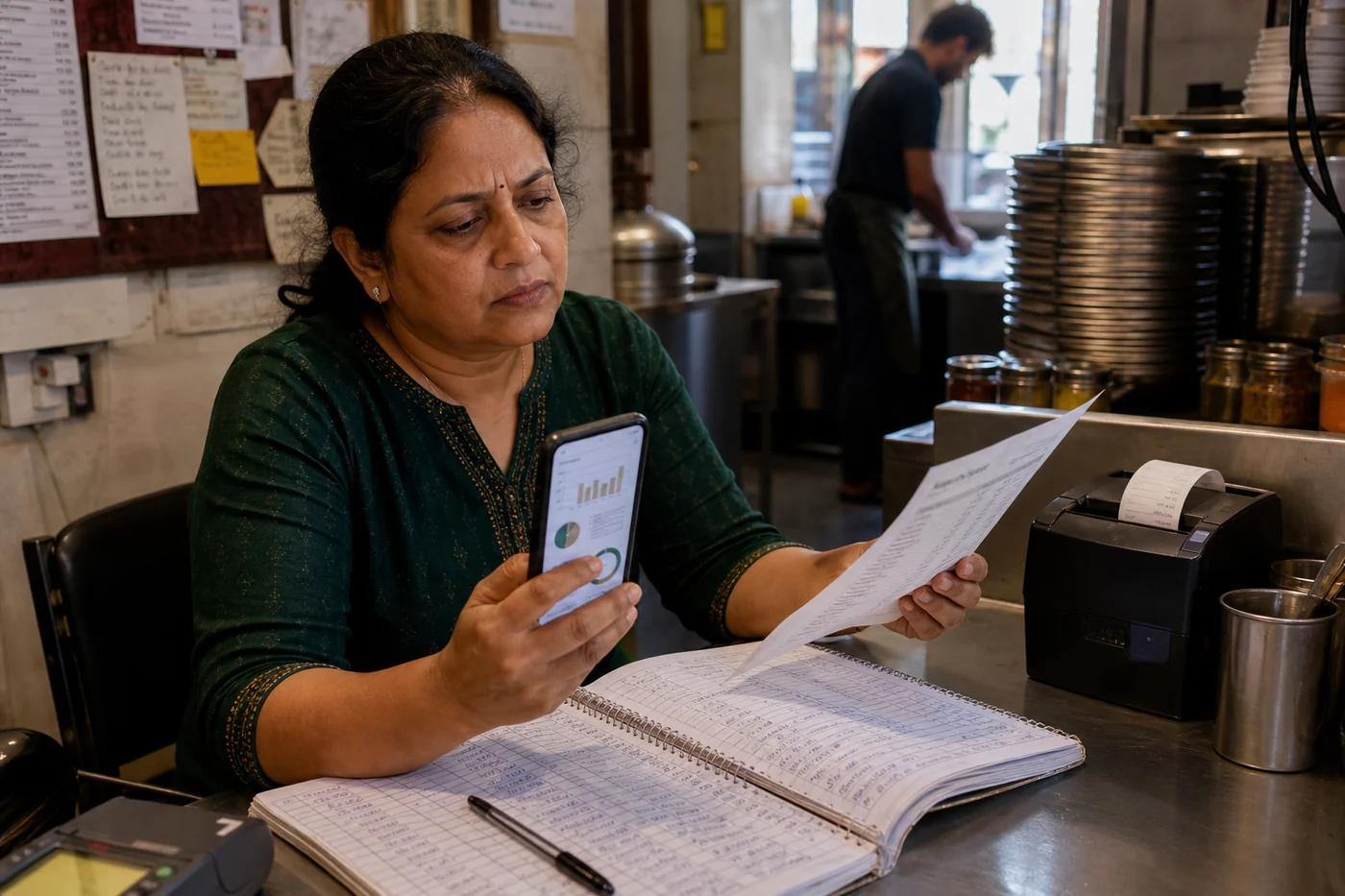
Guru is built for restaurant partners rather than diners. An owner can ask why gross merchandise value fell, which dishes are selling, how a payout was calculated or what is underperforming. The assistant can generate menu descriptions, surface tax reports and payout summaries, and manage ads or restaurant-funded discounts without sending the user through several parts of the app.
The language support may be as useful as the AI. Swiggy says Guru works in more than 20 Indian languages, including Hindi, Kannada and Telugu. A plain answer about a payout can matter more than another chart if the person running the outlet is checking it on a phone while also buying ingredients, answering staff and watching the service line.
This is not a brand-new experiment hidden behind today’s launch. In an August 6 investor presentation, Swiggy said Guru was already trusted by 1.5 lakh active restaurants and handling roughly 10 lakh conversations per month. The same presentation described the next step as moving from a copilot that advises to one that operates the outlet. Those figures and descriptions come from Swiggy; the company has not published an independent study showing how much time or money Guru saves restaurant partners.
The assistant arrives in the middle of a payout dispute
Guru’s ability to manage ads and discounts cannot be separated from the argument happening around those charges. Bengaluru hotel and restaurant groups recently threatened to switch off Swiggy over commissions, promotional campaigns, payout deductions and other fees. After a four-hour meeting with Swiggy executives, the groups moved their deadline from August 15 to September 1 rather than withdrawing it.
The Times of India reported that Swiggy has added OTP-based consent before a restaurant-funded discount is activated and agreed to refund unauthorized campaign fees, according to people familiar with the meeting. Restaurant representatives said they still want simpler payout statements and a clear definition of what counts as unauthorized. These are reported commitments, not a completed audit of past charges.
Earlier reporting shows why the consent record matters. MediaNama reviewed complaints from restaurant owners who alleged that ad charges appeared without permission or restarted after being disabled. The publication said it could not independently verify the underlying Reddit claims and had sought comment from Swiggy. A source close to Swiggy previously told Outlook Business that the issue affected fewer than 1% of partners, that genuine charges without a consent trail were reversed and that a better consent product was being scaled up.
The disagreement is not a reason to dismiss Guru. It is a reason to give the assistant a harder job. If it recommends a campaign, the owner should see the full cost, who funds the discount, when the campaign stops, what approval was recorded and what the restaurant is expected to keep after all deductions. A sales recommendation without that after-state is incomplete.
A one-week payout test for an AI restaurant assistant
Start with one outlet and one ordinary week. Before using Guru to change anything, save seven days of orders, gross sales, average order value, cancellations, restaurant-funded discounts, ad charges, commission, taxes, other deductions and the amount that actually reached the payout account. Do not rebuild a perfect spreadsheet. Use the statements the owner already receives.
Then ask Guru to explain three settled days from that baseline. The arithmetic should reconcile to the payout statement, and every charge should have a name. If the assistant cannot explain a completed statement, it should not be trusted to recommend a new spend against future sales.
For the first live campaign, require a preview before approval: budget, duration, targeted menu items, customer discount, restaurant share, estimated extra orders, expected gross sales and expected net payout. Save that preview next to the OTP or other consent record. At the end of the campaign, compare the forecast with the settlement rather than with the order chart.
The useful denominator is each rupee kept. Count incremental orders, food and packaging cost, refunds, ad spend, discount funding and every platform deduction. Also count the owner’s reconciliation time. A campaign that adds orders while shrinking contribution or creating an hour of payout detective work is not a clean win.
Set a stop rule before the trial. Pause if a campaign exceeds its approved budget, a disabled promotion restarts, the payout cannot be reconciled, or the assistant recommends another spend before explaining the previous one. The goal is not to teach an owner how to supervise more software. It is to make the business easier to understand.
Noah wants a closing-time answer. Mara wants the incentive shown.
Noah Park would test Guru when the kitchen is quiet and the owner wants to go home. Ask one question: “After every Swiggy charge, what did I keep today, and which three orders changed that answer most?” If the response still sends the owner through tax annexures, campaign tabs and settlement PDFs, the chat has not removed the bookkeeping trip.
Mara Vale is wary of advice and sales sharing the same button. Swiggy’s own investor presentation pairs restaurant growth programs with ad and discount optimization, while its food-delivery business benefits from advertising revenue. That does not make every recommendation bad. It means the assistant should label when Swiggy earns from the action it is proposing and show a no-spend alternative beside it.
Noah’s test is about whether the answer helps tonight. Mara’s is about whether the answer is honest about who benefits. Guru needs both. A fast recommendation is useful only when the owner can see the bill before approving it.
What a good restaurant AI assistant should leave behind
The best version of Guru would make a restaurant’s numbers easier to challenge. Every campaign could have one compact record: the recommendation, reason, expected cost, owner approval, changes made, stop date, final payout effect and any refund or correction. The owner should be able to export it without asking support to reconstruct the history.
Its multilingual answers should preserve the numbers and the uncertainty. “Orders may rise” is different from “profit will rise.” A translated recommendation should not become more confident than the underlying evidence, and a spoken approval should resolve into the same visible budget and end date as a typed one.
Swiggy has put a potentially useful assistant in reach of neighborhood kitchens that will never hire a data analyst. The hard part is already sitting inside the product: Guru can see orders, campaigns and payouts together. Now it has to resist grading itself on the easiest number.
For a restaurant owner, more orders are not the finish line. A clean payout, understood before closing time, is much closer.