
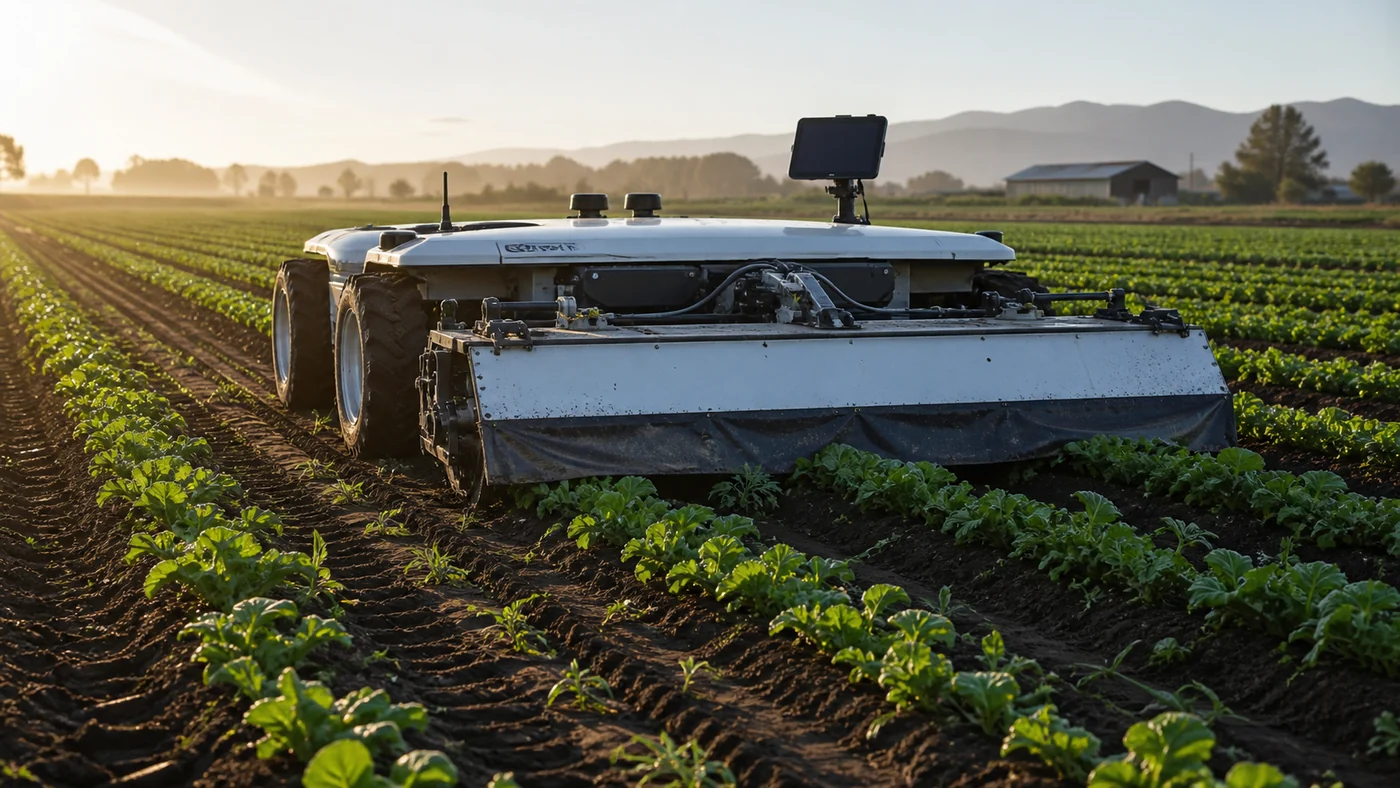
A field is full of local exceptions
Carbon says its Large Plant Model was trained on 150 million labeled plants and is meant to work across crops, regions and growth stages. The Robot Report describes the new setup as a replacement for crop-specific vision models: a grower reviews field thumbnails, marks examples, and the system uses those examples to adjust its behavior quickly.
That claim is promising, but it is still a vendor claim about the product. The launch material does not publish an independent mistake rate by crop, region, light condition or growth stage. It does not tell a buyer how often a new local label is accepted when it should be questioned.
Farm work is exactly where the exception matters. A plant that is unwanted in one bed can be wanted in another. A tiny crop at one stage can resemble something the machine has been trained to remove. Fast personalization is only a win if the person making that call can see the consequence before the laser reaches the row.
Treat the first field pass like a marked-up map
The first use should not be a magical black box. A good field view would show the recent examples the grower labeled, the crop and target categories currently active, a few representative plants the system matched, and the boundaries where it is unsure.
Then give the grower a cheap way to disagree. Mark this one as protected. Hold this row. Show me the last pass. If the weeds or crop stage change after rain, heat or cultivation, the old labels should not quietly become permanent instructions.
That sounds less dramatic than a robot that identifies every plant. It is more respectful of the person who knows why one patch is different from the next—and who has to live with a wrong decision after the machine has moved on.
The proof is in the saved plants, not the fast setup
Carbon says its system can be personalized in real time and lets growers start laser weeding a new field or crop in minutes. The useful buyer test is narrower: on the first local run, how many intended plants were spared, how many targets were missed, and how often did the grower stop or revise a profile?
Those numbers need a physical check. Walk a small sample of rows after the pass. Save before-and-after images for the disputed cases. Keep the label set that was active. A grower should not have to reconstruct why a crop was treated as a target from memory two days later.
This is where AI assistants earn trust in the physical world. Not by claiming they have absorbed every field. By making their local assumptions easy to inspect, correct and retire.
Ivy wants a clear owner. Theo wants a baseline.
Ivy Chen's question is practical: when the profile changes, who owns the first check? If an agronomist, farm manager and equipment contractor can all alter what counts as a crop, the machine needs to show the active profile and the person responsible for the next pass. Otherwise a useful local setting becomes one more mystery for the crew.
Theo Marlow draws a different line. The 150-million-plant figure and the minutes-to-setup claim come from Carbon's materials. They show what the company says the system can do, not a public measure of local field performance. Compare the new profile against a labeled row and log both false targets and missed weeds before treating the rollout as proven.
Both points protect the same thing: the grower's ability to make a local judgment without turning that judgment into an invisible machine setting.
What to ask before the next pass
If you are considering AI-assisted weeding, ask to see a field-specific profile before you ask for a demo. Who labeled the examples? Which crop and weed definitions are active? What happens when the system is unsure? Can a person pause one row without shutting down the whole job?
Then run a small, inspected comparison. Pick one representative area, count the spared crop plants and missed targets, and save the profile with the result. The goal is not to make a farmer babysit a machine forever. It is to make the first local rule visible enough that the machine can become boring for the right reason.
The best AI farming tools should give people less guessing to do—not give a laser more room to guess on their behalf.