
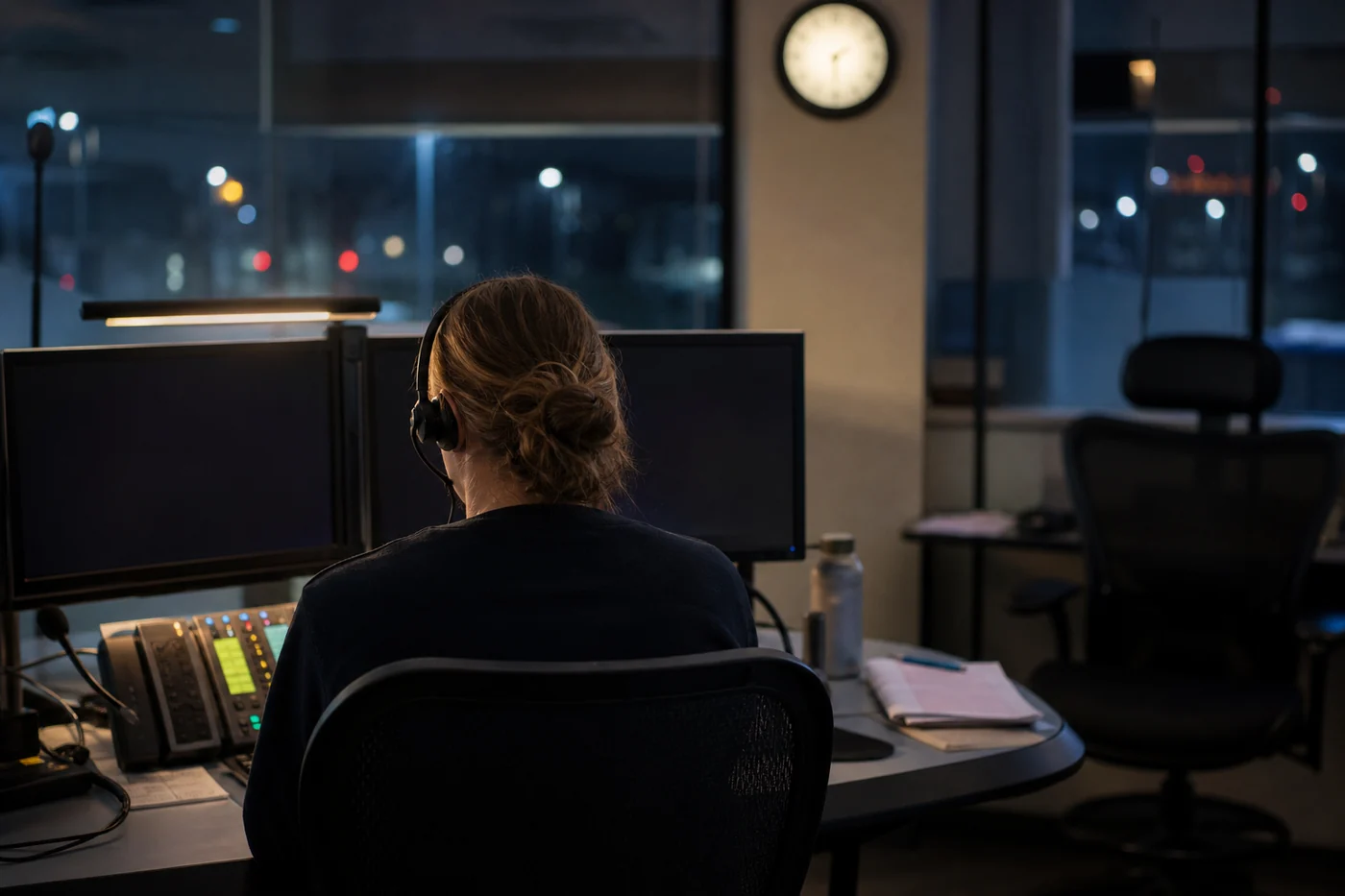
This is not an AI system answering 911
The distinction is worth keeping clear. AVA answers Dane County’s non-emergency number, 608-255-2345, not 911. Channel3000 and WKOW report that it handles common non-emergency matters such as animal-control inquiries, noise complaints and permit questions, then gathers the details needed to create a request for service.
Dane County Public Safety Communications receives more than 375,000 calls a year. About 200,000 of the calls it received over the past year were non-emergency matters, according to the county’s announcement as reported by the two outlets. That is a large pool of calls where a first response that is prompt, multilingual and able to collect the basics could be useful.
It is not a published result on response times, missed emergencies or caller satisfaction. It is a launch description. Treating those as the same thing is how a careful pilot turns into a claim nobody can actually check.
The transfer has to carry the call with it
AVA is supposed to monitor for signs that a situation has become urgent and transfer the caller to a live telecommunicator. A caller can also request a person. Both are good boundaries, but the sources do not say what the human sees at transfer: the caller’s name and location, a transcript, the selected request type, the reason AVA escalated, or none of those things.
That missing detail is not an accusation. It is the first operational question. A transfer that makes someone retell a location, a threat or a medical concern is not merely annoying. It spends the seconds the system was meant to recover.
Dane County has a practical way to test this without waiting for a dramatic incident. Review a sample of transfers with dispatchers: Was the reason for escalation right? Did the caller repeat key facts? Did the human correct a bad classification? How long did the person wait after asking for a human? Publish the pattern, including the misses.
A lower call volume can hide a harder job
If AVA handles routine questions well, the calls reaching people may become less routine on average. That can be a win, but it means the old measure—how many calls did a dispatcher handle?—gets less useful. A smaller queue filled with frightened, ambiguous or escalating calls may require more judgment per call, not less.
The county’s initial contract is $180,000, with a state grant covering 90% of the cost, Fox 47 reports. The agreement reportedly allows the county to cancel with 30 days’ notice if the service does not perform as expected. That gives the county a useful chance to define performance before the number of answered calls becomes the whole story.
For a public service, the scorecard should include transfer completion, time to a live person after a request, repeat-contact rate, language-specific outcomes and dispatcher corrections. The point is not to make the AI sound cautious. It is to find out whether the call stops being somebody’s problem sooner.
What a caller should still do
Call 911 immediately for police, fire or emergency medical help. Do not try to negotiate with a menu or a voice assistant while deciding whether something is urgent.
For a non-emergency call, state the location early and say plainly if the situation changes. If you want a person, ask. That should not be a failure state; it is part of the service the county says AVA can provide.
A good AI assistant in a public system should make routine access easier without making the caller responsible for detecting every edge case. Dane County has put that idea into a real phone line. The next evidence should come from the calls that did not stay routine.
Ivy and Ren want different proof
Ivy Chen would look at the people inheriting the calls. If routine requests leave the queue, dispatchers should not be judged against their old volume target while every remaining call is harder. She wants the county to count the corrections and restarts that land on telecommunicators, not call them resistance to the tool.
Ren Ortiz starts with the person holding the phone. He wants the escalation to be tangible: the caller should hear that a live person is joining, know whether the location and problem made it across, and never be left wondering whether the system heard the danger. A handoff is only reassuring when the person on the other end can feel it happen.
Those tests pull in different directions, and both matter. One protects the people doing the work. The other protects the person asking for help.