
A trace is more useful than a clever guess
The new Activity detail addresses a familiar smart-home problem. Before this release, you could see that a device changed but often had to dig through traces to work out why. Now the activity entry can lay out the chain of events and identify the automation or script involved, according to Home Assistant’s release notes.
That matters because a home does not experience an automation as a line of code. It experiences it as a porch light, a door lock, a fan, a heater, or a notification at the wrong moment. When a system is wrong, the person standing there needs a short explanation they can act on—not a confidence score and a scavenger hunt through settings.
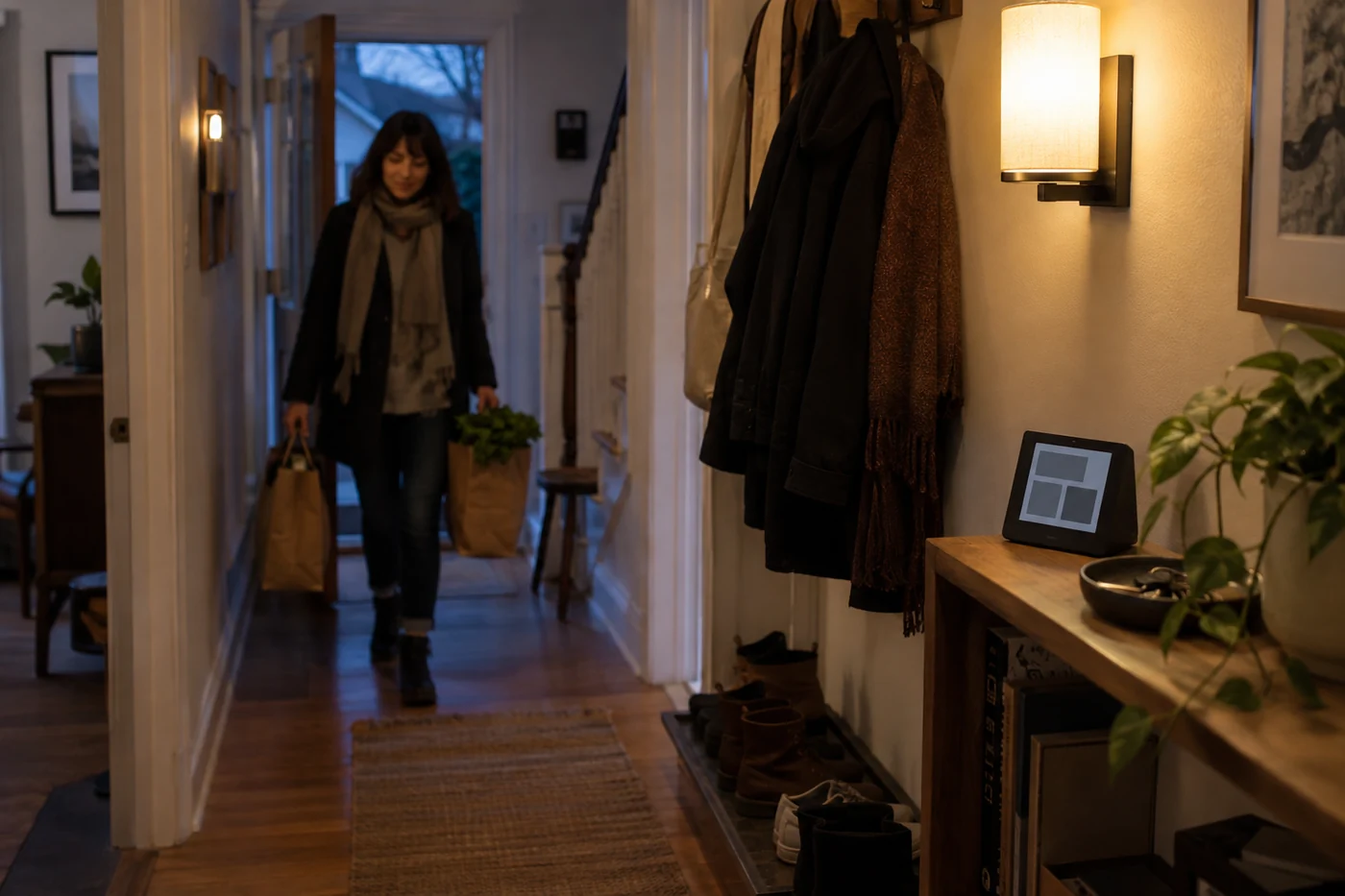
A good explanation should be specific enough to check: motion sensor in the hall saw activity at 6:14 p.m.; the arrival routine ran; it turned on this lamp. If that is not what happened, the next move should be just as clear: pause this routine, adjust the condition, or mark this as a bad trigger.
Not every signal deserves the same kind of attention
The release’s new Security dashboard separates active alerts from ordinary status and lets households choose which entities can raise an Alert or a Warning. A door left open and a smoke alarm should not look equally urgent. When nothing needs attention, the alert area disappears rather than becoming another screen to babysit.
That distinction is easy to underestimate until a home has enough connected devices. A system that shouts about everything teaches people to ignore it. A system that quietly records ordinary changes while reserving interruption for a few real problems has a chance of giving attention back instead of taking more.
The same release adds Favorites, so the handful of sensors, locks, and doors a person checks can stay at the top. That is mundane product work, but it respects the way people actually use a home: they do not want a tour of every entity. They want to know whether the back door is locked before bed.
The physical map still matters
Home Assistant also moved a Matter network map into its main interface. The map can show how Matter and Thread devices connect to Wi-Fi and Thread networks. That will help people who maintain their own setups, but it is also a useful reminder that a home automation is never only software. A weak connection, a dead battery, a moved sensor, or a device that has quietly gone offline changes what the house can safely infer.
For anyone adding AI assistants to this pile, that is the standard worth keeping. An assistant may offer the friendlier sentence, but it should not hide the physical source. If it says a room is empty, a package arrived, or the heat is on, a person should be able to see which device supplied that claim and how fresh the reading is.
Home Assistant’s release notes describe these interface changes; they do not prove that every household will find its automations easier to trust or that every device will behave reliably. The practical test is smaller: after an unexpected change, can someone understand it and fix it before it becomes a family argument or a midnight troubleshooting session?
Ren, Jun, and Mara want three different things from the same screen
Ren Ortiz wants the cause tied back to the room: which sensor saw something, when it saw it, and what device changed because of that reading. A smart home feels calmer when its explanation names a lamp, a door, or a hallway rather than hiding behind a generic automation label.
Jun Vega is looking at the person who did not build the system. The explanation should fit on the first screen, in plain words, with one obvious way to pause or correct the routine. A technical trace is useful only if the person near the light can turn it into a decision.
Mara Vale’s question is what happens after the explanation. If the house acts on a bad signal, the fix cannot be a buried setting or a permanent rule created in frustration. There should be a quick stop, a way to see what will change next time, and enough restraint that a single odd evening does not become a new household policy.