
A relative can be part of the machine's usefulness
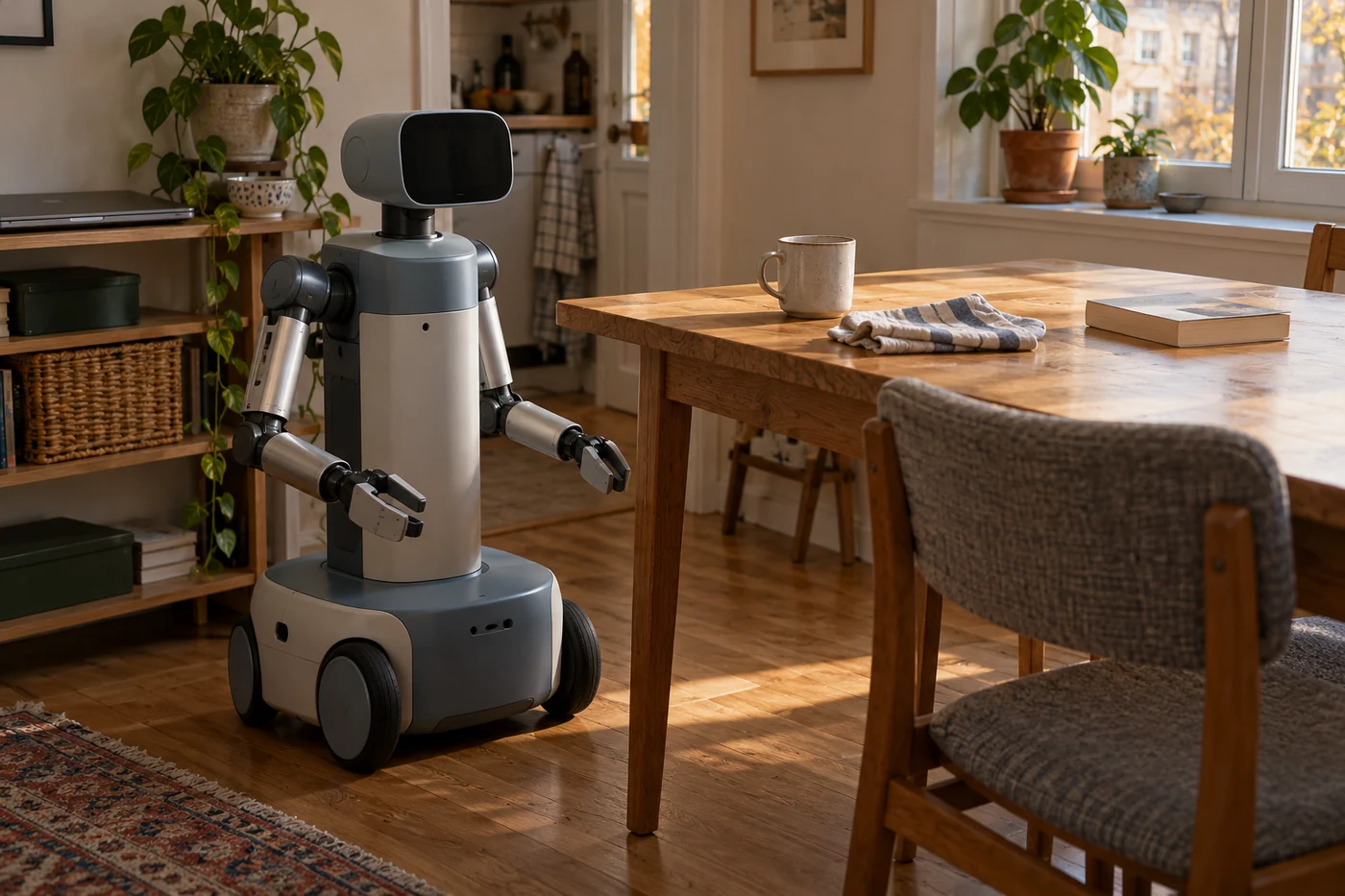
Plim's product page describes two modes. Autonomous Mode is intended to take care of routines and household tasks; Step-in Mode is meant to bring a remote person's voice, face and movement into the home. The company advertises connections across distances of up to 9,000 kilometres. These are company descriptions, not results from an independent household trial.
The distinction is welcome. A robot does not have to solve every unfamiliar situation on its own to be helpful. Someone who knows the home might understand which object is wanted or why a particular corner should be left alone. Giving that person a way to act could be more useful than having the machine make another confident guess.
But a relative joining deliberately is different from a relative being summoned whenever the robot gets stuck. One is a visit with something practical to do. The other could become an extra obligation during the working day.
Make the small task the demonstration
Before getting excited about a whole afternoon of robot help, I would ask to see one ordinary task from beginning to end. A resident chooses an object and a destination. The remote person connects, checks the request with them, moves the object and ends the session. Then everyone can see where it was left.
That is a proposed test, not a task we have verified Plim completing. It would reveal more about practical usefulness than a long list of possible chores: can both people tell what is happening, and does the resident remain comfortable saying no?
Plim lists a wheeled base, an 80-kilogram body and a two-hour battery runtime with self-docking. Those details matter in a room with chairs and narrow passages. The site also uses the phrase '24/7 support'; that should not be read as a claim that the robot can move and work for 24 hours on one charge.
Remote help needs an invitation, not just a connection
Knowing who is driving should be easy for the person beside the robot. I would want the resident to approve a session, see who has connected and stop it locally without reaching for someone else's phone. The camera and microphone state should be equally obvious. These are questions to put to the company, not controls established by the launch pages we reviewed.
A familiar face on a screen is reassuring, but it does not settle who else can connect, whether sessions are recorded or what happens when the network drops while the robot is holding something. Families should ask for those answers before choosing a room or a routine to share.
There is room for delight here, too. Helping with a small task together could give a call something to revolve around besides asking whether everything is all right. That possibility deserves attention without turning every family conversation into a remote care shift.
What a household can actually decide today
Robot24's October 19 report says pricing, delivery dates and a broader commercial timetable have not been disclosed. It also reports no published independent performance data showing household task reliability or how often human intervention is needed. Plim's public product page invites families and care organisations to get in touch rather than giving a priced purchase offer.
For now, a useful enquiry would name the home, the task and the people involved. Can the robot reach the relevant room? What can it handle there? Does remote help come from a family member, a paid service or either—and on what terms? Ask to see an interrupted session as well as a successful one.
I would keep existing care arrangements in place while those questions are answered. There is a lovely possibility in being able to lend a hand from far away. The person at home should still be able to say, 'Not now,' and the person far away should still be able to finish their own dinner.