
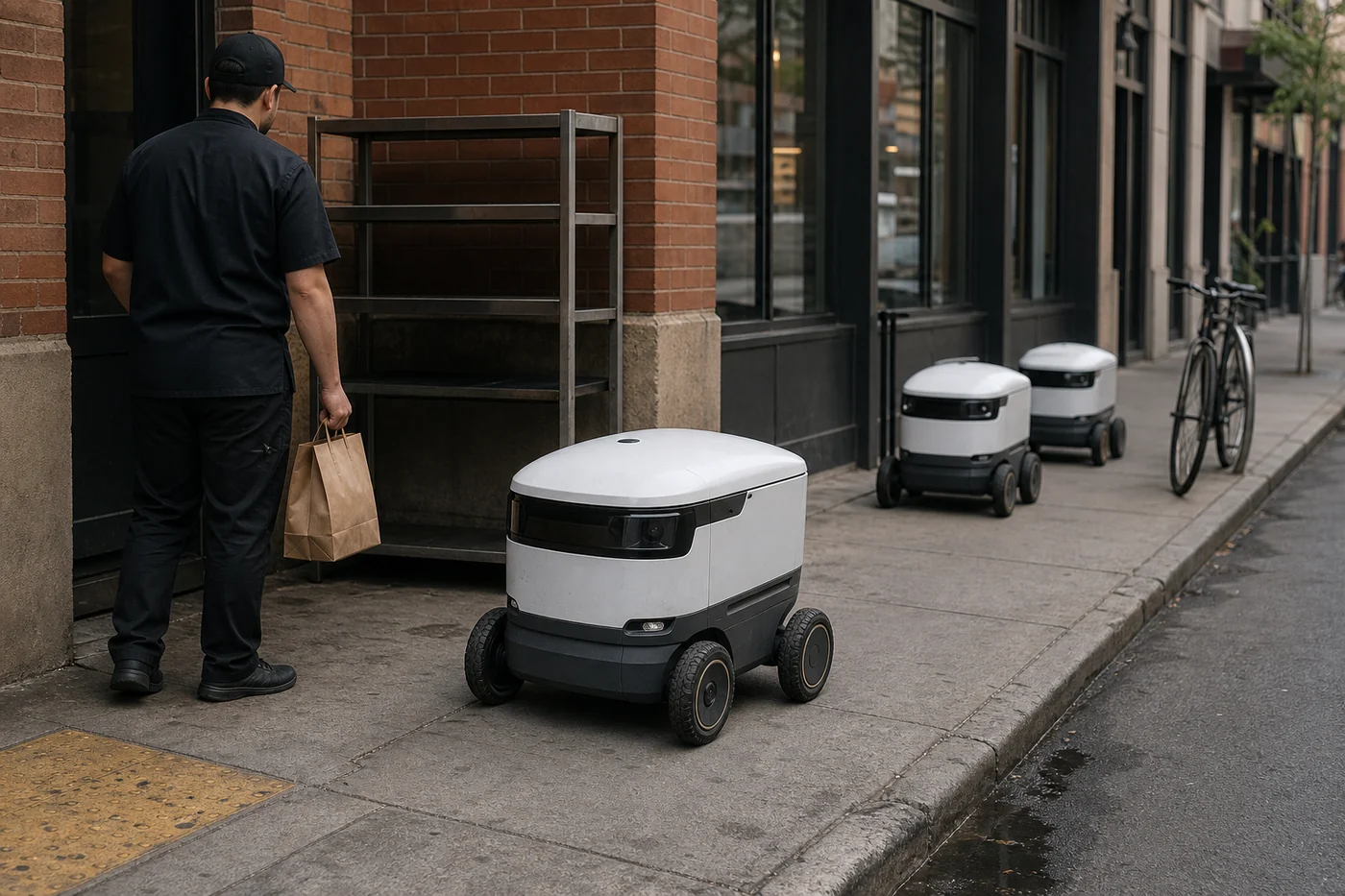
What changed between Uber and Serve Robotics
Uber’s Form 13F for the quarter ended June 30 lists seven reportable equity positions and no Serve Robotics shares. The filing was signed on August 7 and does not disclose the final sale date or price. TechCrunch reported on August 11 that Serve learned about the completed exit from the filing, citing a source familiar with the situation.
The ownership exit arrived beside a larger operating disagreement. Serve CEO Ali Kashani said the two companies had different views on fleet coordination, merchant integration and the model for scaling their shared robot fleet. In 2023, Serve announced a commercial agreement that allowed it to deploy up to 2,000 robots across multiple U.S. markets through Uber Eats.
Serve’s second-quarter release now removes expected Uber demand from its second-half outlook and revises full-year 2026 revenue guidance to $9 million to $10 million. The partnership has not ended today, but the old picture—Uber demand filling a large Serve fleet—no longer looks like the default path.
Why a working delivery robot can still sit idle
People asking whether delivery robots actually work usually get shown the machine: cameras, wheels, range, obstacle avoidance and a cargo box. Those things matter. Utilization is a different problem.
Start inside the restaurant. A robot order needs a pickup point that staff can recognize without abandoning the counter. The bag has to be ready when the robot arrives, matched to the right compartment and released without a worker wondering which screen to check. Serve’s current investor presentation says two-thirds of delivery orders in its operating areas cannot be served by robots because the restaurant lacks the needed back-of-house integration. Serve is pitching a cellular arrival device called Beacon as one answer. That figure and the proposed fix come from the company, but they name a real bottleneck: a machine waiting at the curb is only half a delivery system.
Then the marketplace has to choose the robot for the right order. Distance, route, weather, cargo size, restaurant readiness, customer location and fleet position all affect the match. If the app sends a human courier because its dispatch rules, merchant setup or local demand make that easier, the robot’s navigation skill never gets tested. It just waits.
The customer sees the last handoff. Where should the robot stop? Is the arrival time honest? Can someone with limited mobility reach it? What happens if the compartment does not open, the building entrance is wrong or the order is late? A robot delivery that saves labor upstream but makes the customer hunt around the block has moved the work to the worst possible screen: a phone held outside beside cooling food.
Serve’s quarter is growing and shrinking at the same time
Serve reported $3.2 million in second-quarter revenue, up 404% from a year earlier and 9% from the previous quarter. Revenue tied to DoorDash grew nearly 50% sequentially, according to the company. Those numbers do not look like a robot fleet with no market.
The same release shows why the headline needs a second line. Daily active robots moved from 812 in the first quarter to 792 in the second. Daily supply hours moved from 10,295 to 9,809. Serve says both figures include its outdoor delivery robots and indoor hospital robots, so they cannot be used to isolate the Uber fleet. They do show that putting more machines into the world and keeping them productively assigned are separate jobs.
Serve is also earning money from more than delivery fees. Advertising made up nearly half of its food-delivery revenue in the quarter, while recurring revenue made up more than half of total revenue. The company has hospital robotics contracts and says DoorDash demand is growing. Diversification may make the business less dependent on any one marketplace. It also makes a simple delivery-count headline a poor description of what Serve has become.
Two views from the curb
Ren Ortiz would not grade the fleet from a stake sale or one robot video. He would stand at a restaurant during the lunch rush and time the physical handoff: bag ready, robot present, compartment loaded, route started, customer reached, exception recovered. If the robot waits twelve minutes because nobody inside knows it arrived, better navigation will not repair the queue.
Cass Bell is more skeptical of letting one large platform become the demand oracle. A partnership can look like market proof while dispatch rules quietly decide which machines get work. She would ask how often an eligible delivery was offered to a robot, how often it was accepted, why it was skipped and whether another partner produced a different result in the same neighborhood.
Ren’s test is local and physical. Cass’s is about platform incentives. Both are better than counting robots parked on a map, because a deployed machine is inventory. A completed delivery is a service.
What to check before calling robot delivery a success
For restaurants, start with the pickup minute. Can a new employee see that a robot has arrived, identify the order and load it without opening three systems? Count robot wait time and staff interruption time together. A faster delivery that creates another counter alarm is not free.
For delivery platforms and cities, publish the denominator around the demo. Show eligible orders, robot offers, completed deliveries, customer cancellations, human takeovers and time spent waiting at merchants. Separate a robot being available from a robot being used. If the fleet is concentrated in a few easy neighborhoods or hours, say so.
For customers, keep the arrival simple: an accurate location, a short unlock path, a visible support route and a fallback when the machine cannot finish. Do not make people learn the fleet’s operating model while standing on a curb.
Serve built the 2,000-robot fleet it spent years promising. Its next chapter is less cinematic: get the right bag into the right box often enough that restaurants, platforms and customers stop noticing the machinery. Uber’s exit makes that work harder. It also makes the test much clearer.