
The lab is a bet on feedback, not a finished factory
The Robot Report says Vention’s lab will work across industrial data collection, computer vision, learning from demonstration, and robot manipulation. Vention’s CEO told the publication that its robot cells collect industrial manipulation data; the company also says it has deployed more than 28,000 machines and works with more than 6,000 factories. Those scale and revenue claims are Vention’s own, not an independent field study.
The distinction matters. A lab can be a useful place to turn production problems into better systems. It cannot, by itself, show that a particular robot has reduced rework, avoided damaged parts, or made a line easier to run. Those are outcomes that need a named task, a before-and-after baseline, and evidence from the people living with the machine.
Vention describes kitting as one target: preparing the right pieces for a particular station, such as a headlamp, harness, bracket, and screw for a car build. Kitting is exactly where a handoff can fail quietly. A tray can look complete while one part is wrong, missing, or waiting somewhere the next worker will not think to check.
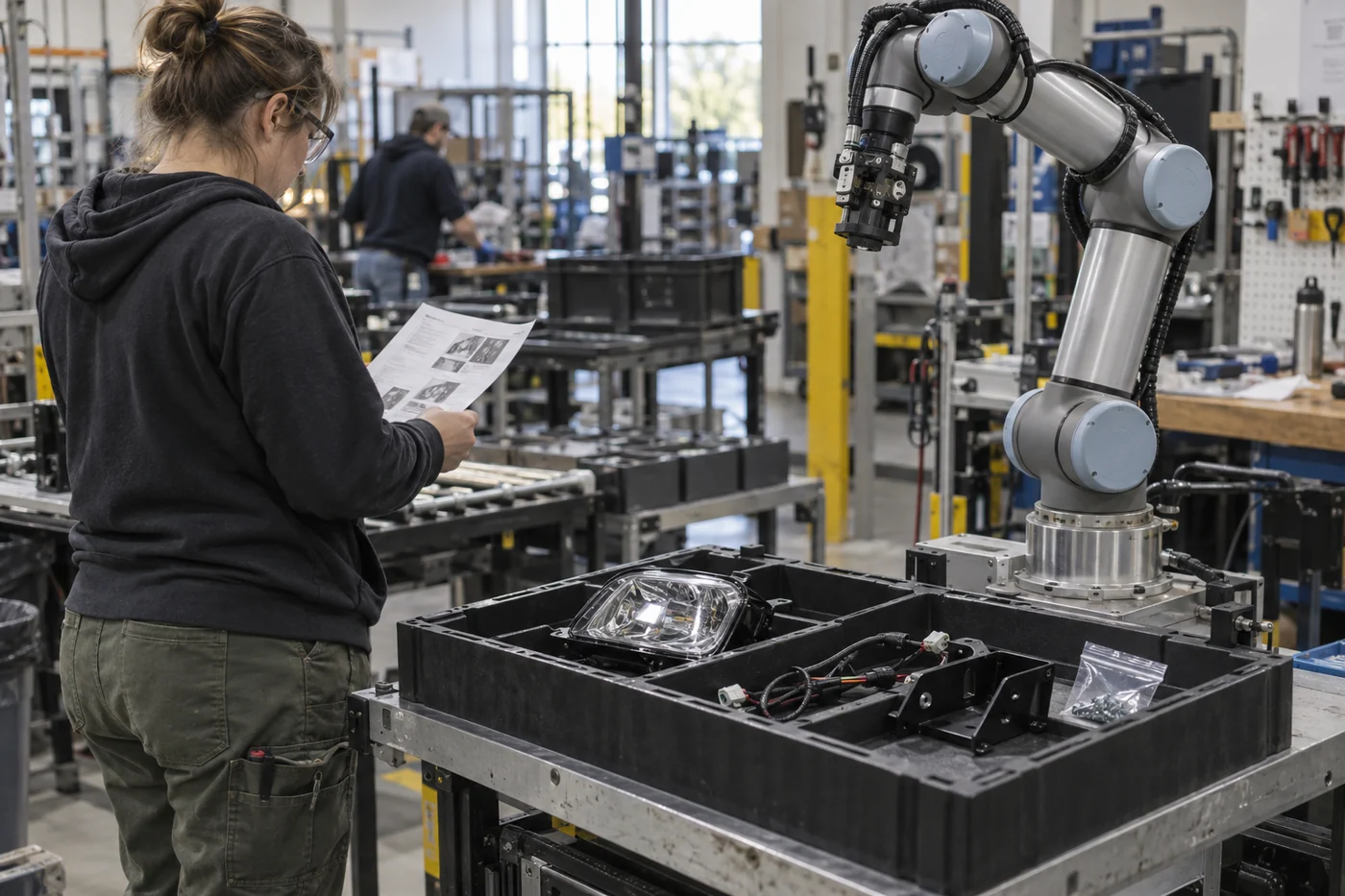
Give the next person a state, not a mystery
A useful factory screen does not need to narrate every motor command. It should answer four plain questions:
• What was the robot trying to make or move? • What is the last confirmed location of each important part? • Did the robot finish, pause, retry, or ask for help? • What should the next person inspect or do before restarting?
That might mean a tray ID, the part image the system matched, a timestamped camera frame for a miss, and a clear label such as “one harness unconfirmed — hold kit at Station 7.” The point is not to drown a line lead in logs. It is to prevent the familiar scavenger hunt where someone has to search a cart, a tote, and three screens before deciding whether an order can move.
This is where AI assistants and physical automation meet a very old factory problem: work gets expensive when context disappears between people. The helpful machine is the one that leaves the situation easier to pick up than it found it.
What to ask before calling a robot pilot a success
If you are a small manufacturer, a line lead, or the person asked to approve a pilot, skip the broad question of whether the robot uses AI. Ask for one ordinary exception path.
Pick a moment the current process regularly gets wrong: a mixed tray, a loose bag of fasteners, a part that arrives upside down, a label that is covered, or a bin that is unexpectedly empty. Then watch what happens when the system is unsure. Does it put the work in a visible hold state? Does the next shift get the evidence they need? Can someone correct the record without quietly teaching the robot a bad habit?
Vention’s lab may help turn such moments into better robot behavior. Its announcement does not answer these questions yet. That is not a knock on the lab. It is the work still worth measuring.