
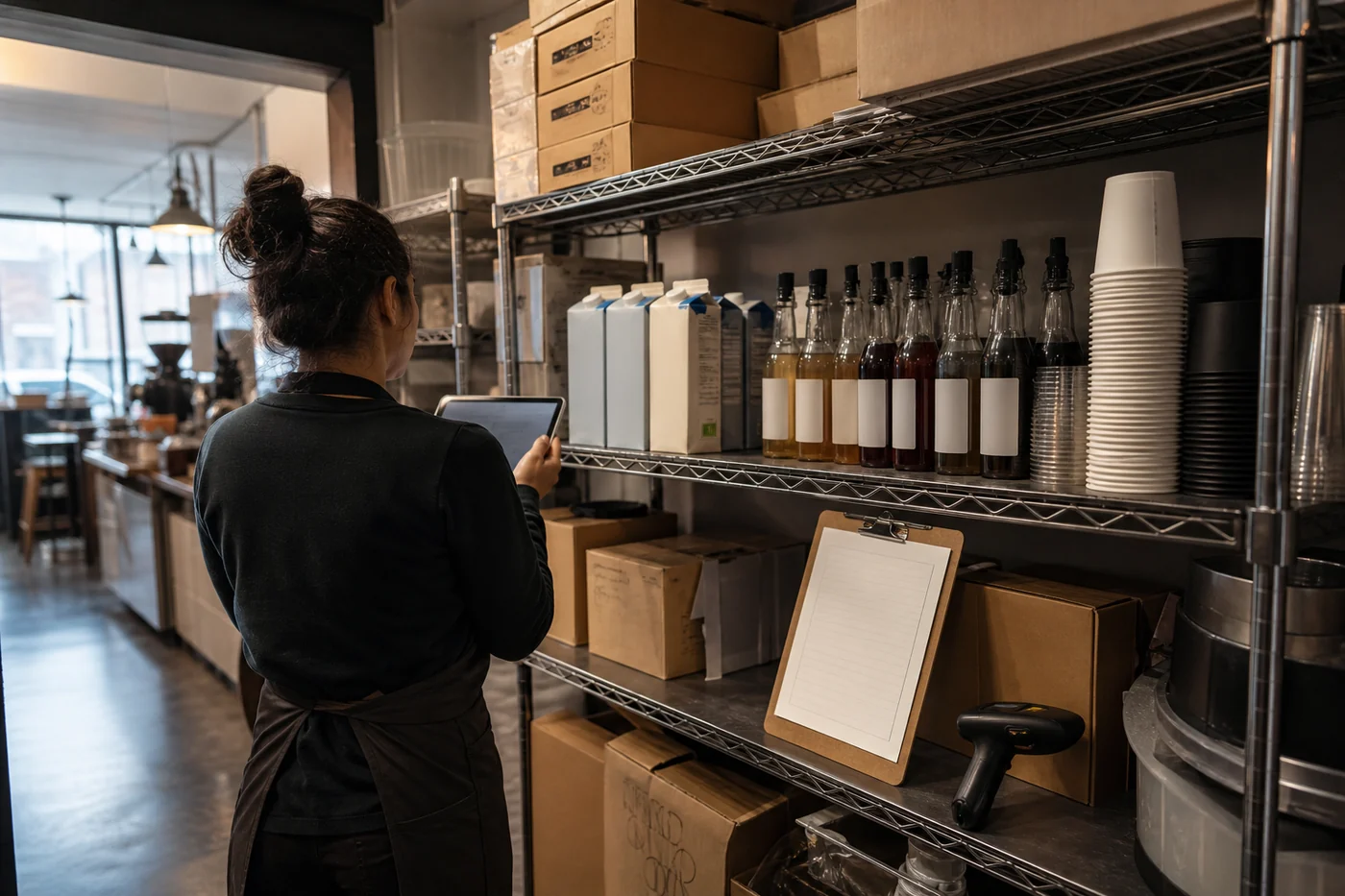
A wrong count is not a small error
In a stockroom, the output has consequences quickly. If the system says oat milk is present when it is not, a store can miss a replenishment. If it counts the wrong syrup, a person has to stop and resolve the mismatch. The time does not disappear; it moves into recounts, workarounds and the quiet habit of checking the AI before trusting it.
That habit is the practical failure signal. A tool can be technically impressive and still lose if the worker must do a second pass to feel safe. No one needs another screen that says the shelf is probably fine. They need the shelf check to end.
Why physical work exposes weak AI quickly
Text systems get to smooth over ambiguity with a fluent sentence. A stock count has to land on a number. Cartons look alike. Labels turn away. A delivery is half unpacked. Someone put the almond milk where the oat milk belongs. The ordinary mess is the job, not an edge case that can be deferred to version two.
That does not mean the human must keep every part of the task. A good assistant could flag a shelf it cannot see clearly, match a count against recent deliveries, or surface a weird change worth checking. But it should say which case it is handing back and why. Quiet certainty is the expensive part.
Give the AI a job that can fail honestly
Columbia's account of the DeepStock research points in a sturdier direction: use AI to read large, changing demand signals, then keep its actions inside basic inventory rules. It may sound less magical than asking a model to decide everything. It is also closer to how a store survives a bad forecast: there are known constraints, physical limits and people who recognize an absurd order before it goes out.
For a small business, start narrower. Pick one category with a known manual baseline. Keep a visible list of every count the system marked uncertain, every correction it needed and every stockout or over-order that followed. If the tool cannot beat the old method without asking for a shadow count, it has not earned a larger role.
Two ways to tell whether the tool helped
Priya Rao would count the whole aftermath, not just the model's first answer: manual recount minutes, corrections, missed replenishments, waste, and how often a worker had to open a second system to settle an argument. A prettier accuracy rate is not enough if the team now has more places to look.
Noah Park would start with the person working the shelf. Can they see what the tool saw, mark a count wrong without a report, and finish the handoff before the next rush? If correcting the assistant takes more concentration than the old count, the software has mistaken supervision for help.
Cass Bell's version is blunter: let the assistant earn the right to be boring. Give it a shelf with two similar cartons, a partly hidden bottle and one unexpected delivery. If it cannot say “I am unsure; check these three items,” do not call its confident total a time-saver.
What to ask before buying an AI inventory tool
Ask for a real-store trial, not a polished recognition demo. Bring ordinary clutter and substitutions. Ask what happens when the camera cannot see an item, when the count conflicts with a delivery record, and when a worker says the tool is wrong. Then time the correction. A product that treats every exception as a support ticket will quietly hand the work back to the store.
The better promise for work automation is modest: fewer repeated counts, clearer exceptions and less guessing. An AI assistant does not need to replace every pair of eyes to be useful. It does need to leave the person with less to chase when the shift is over.